

Understanding the Waterfront Condo Buyer
Before diving into the aesthetics, it is crucial to understand the specific needs of those investing in waterfront condo living. When purchasing a luxury residence along the Gulf Coast, buyers are not just looking for a beautiful space; they are seeking a lifestyle that balances elegance with practicality.
The primary pain points for waterfront homeowners often revolve around the unique environmental challenges of coastal living. Salt spray, high humidity, and intense sun exposure can quickly degrade standard interior materials, making durability just as important as design. Furthermore, condo living typically presents spatial constraints compared to single-family estates, requiring innovative solutions to maximize both storage and the sense of openness.
Another significant consideration is view preservation. Homeowners want to frame their spectacular water vistas without cluttering the sightlines or compromising their privacy. Finally, there is the challenge of creating a space that feels both currently stylish and enduringly timeless, avoiding the cliché nautical themes of the past.
The Evolution of Coastal Design
The most searched interior design trends among Gulf Coast waterfront condo owners in 2026 reveal a sophisticated buyer who has moved past generic coastal aesthetics and is now asking more precise questions about materials, durability, and long-term value. They are looking for expert guidance on how to elevate their spaces beyond the expected. They want actionable advice on materials that can withstand the coastal elements while maintaining a high-end, luxurious feel.
The overarching question is: How do we create a sanctuary that reflects the beauty of the water without being overly literal?
Embracing "Quiet Luxury Coastal"
In 2026, the dominant design philosophy for waterfront residences has matured into what designers and editors at Architectural Digest, Elle Decor, and the American Society of Interior Designers are collectively calling "Quiet Luxury Coastal," a movement away from themed coastal decor toward material-driven, architecturally grounded interiors. Nowadays, the focus is on architectural, understated elegance that deeply connects to the natural landscape.
This aesthetic relies on texture and form rather than overt themes. It is about creating a space that feels intentionally curated and deeply calming. When you walk into a residence in Bacopa Bay, the design should feel like an exhale, a seamless transition from the natural beauty outside to the refined comfort inside.
The 2026 Organic Warmth Palette
The color trends for waterfront condos have seen a significant shift. The high-contrast, stark whites that once dominated modern coastal design are being replaced by tonal warmth. In the bright Florida sun, pure white can often feel clinical or cause eye strain. The 2026 palette utilizes colors that absorb and soften natural light.
We are seeing a strong foundation of warm neutrals. Think of the subtle shades found on a wet shoreline or a sun-bleached conch shell. Creamy ivory, soft mushroom, and oatmeal taupe are the new base colors, creating a grounded, expansive, and inherently expensive look.
For accents, the trend is toward "found colors" from nature. Sage green reflects local mangroves, while sea glass blue and sun-faded coral add organic washes of color that pair beautifully with natural oak and stone finishes. The 2025 Sherwin-Williams Color Forecast and the Benjamin Moore Color Trends Report both independently identified warm organic neutrals as the dominant direction in coastal residential design, a shift driven by homeowner fatigue with high-contrast interiors and growing interest in biophilic environments.
Sustainable and Resilient Materials
In a waterfront environment, luxury is defined as much by performance as it is by appearance. According to the National Association of Home Builders, coastal properties experience material degradation at two to three times the rate of inland homes due to salt air exposure, making material selection one of the highest-leverage decisions a waterfront condo owner can make. Budget expectations for a full Gulf Coast condo interior refresh in 2026 typically range from $85 to $175 per square foot depending on material grade and contractor experience, based on figures published by HomeAdvisor and corroborated by Pinellas County renovation contractors.
For homeowners researching the best flooring for a coastal condo in Florida, the 2026 answer is consistently ultra-wide plank luxury vinyl (LVP) or engineered hardwood with embossed-in-register technology, both of which resist the humidity cycling and salt air exposure that destroy standard hardwood installations in Gulf Coast buildings. These wide boards create a clean, monolithic look with fewer seams, making spaces feel larger. The low-sheen, matte finishes mimic the raw texture of driftwood, providing an authentic, barefoot-friendly experience that is also incredibly durable and water-resistant.
When selecting metals for fixtures and hardware, marine-grade options or brushed brass and bronze are preferred over polished chrome, which can pit and corrode in salt air. As highlighted by Sturman Architects, choosing materials resistant to water and salt is vital for the long-term durability of your waterfront property.
Maximizing Views and Indoor-Outdoor Flow
The true luxury of a waterfront condo is the view, and 2026 design trends are all about framing and maximizing that asset. The goal is to blur the line between the interior living space and the outdoor environment.
This is achieved through the strategic use of "Biophilic Windows." Rather than heavy drapery that blocks the light and the view, designers are pairing natural woven wood shades—made from renewable bamboo or jute with layered linen drapes. The woven shades filter the intense sun into soft, dappled light, while the linen provides airy movement when the sea breeze hits. This approach ensures that whether you are looking out over Dolphin Cay or the downtown skyline, your view remains the focal point.
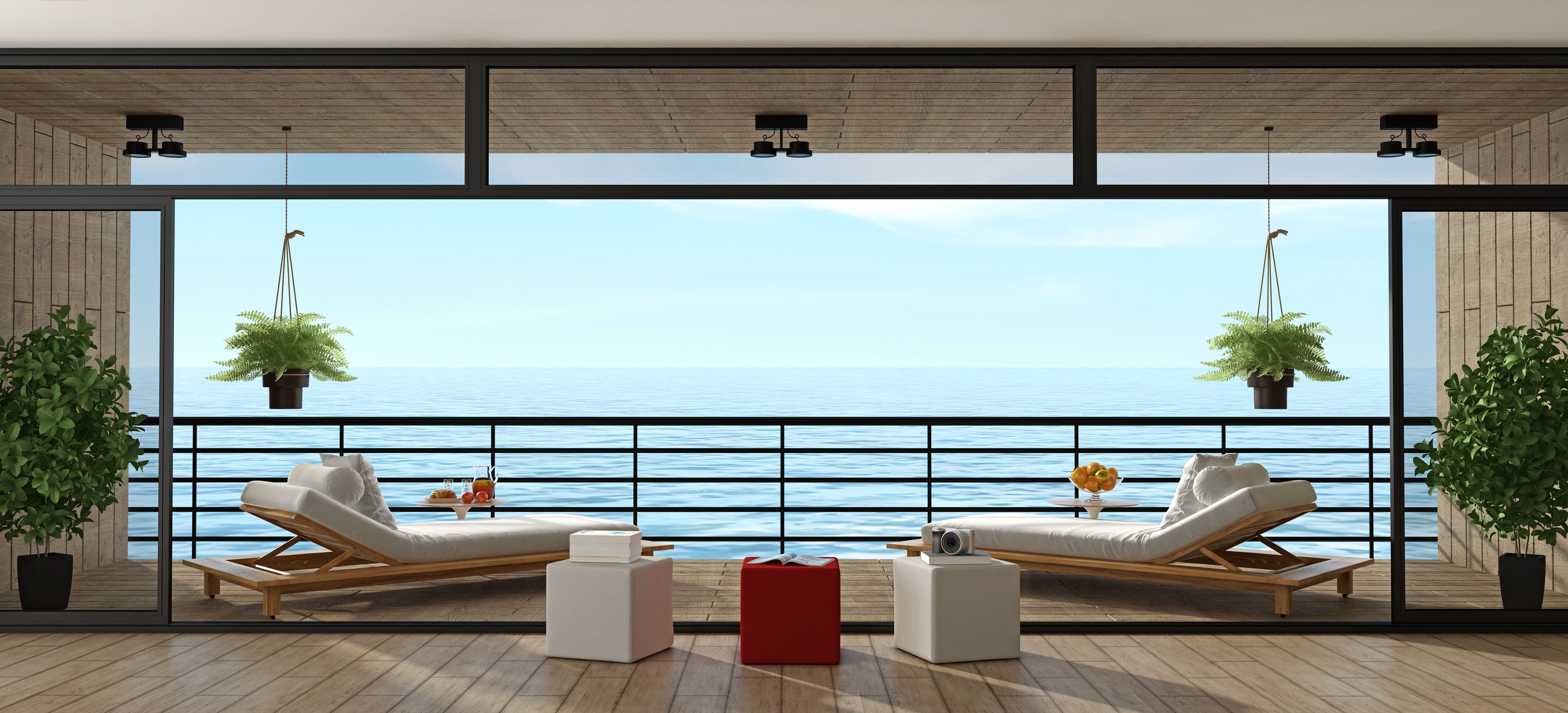
Furthermore, outdoor balconies and terraces are no longer afterthoughts; they are designed as direct extensions of the indoor living space. By using cohesive flooring materials that flow from inside to out and selecting high-end, weather-resistant outdoor furniture, the perceived square footage of the condo is significantly expanded.
For those planning a luxury waterfront condo renovation in St. Petersburg or the surrounding Pinellas County market, the indoor-outdoor flow upgrade consistently delivers the highest perceived value per dollar spent, according to local real estate professionals who work the waterfront inventory.
Spa-Like Wellness Sanctuaries
According to the 2025 Houzz Luxury Home Design Report, wellness amenities ranked as the top requested feature in high-end residential renovations for the third consecutive year, with spa-like bathrooms appearing in 67 percent of luxury remodel briefs. In 2026, waterfront condo bathrooms along the Gulf Coast are reflecting this shift, evolving from functional spaces into private retreats designed for daily restoration. Even in smaller condo footprints, the emphasis is on creating spaces for restoration.
We are seeing the integration of steam showers, heated stone flooring, and, where space permits, freestanding soaking tubs positioned to take advantage of water views. The use of natural stone, such as honed marble or travertine, combined with organic wood vanities, brings the grounding elements of nature indoors.
The American Institute of Architects 2025 Home Design Trends Survey identified health and wellness spaces as the fastest-growing design priority in luxury residential projects, surpassing open floor plans for the first time. For waterfront condo owners, this means the bathroom is no longer a finishing detail; it is a primary investment decision.
Smart Home Integration for Effortless Living
According to a 2024 report by the Consumer Technology Association, smart home technology adoption in luxury residential properties grew 34 percent year over year, with automated climate and lighting systems ranking as the most requested features. In waterfront properties specifically, where humidity and UV exposure can damage interiors and drive energy costs, these systems move from convenient to essential.
When evaluating smart home systems for a waterfront condo, prioritize humidity monitoring and automated climate response first, as unmanaged humidity is the leading cause of mold, warping, and finish degradation in Gulf Coast interiors. Systems like Lutron and Crestron offer integrated solutions that manage lighting, shading, and climate from a single interface, with motorized window treatments programmable to track the sun's position and protect furnishings from UV fading. For audio, in-ceiling systems by Sonance or similar brands integrate flush with the ceiling plane and eliminate visual clutter. When consulting with an integrator, ask specifically for a system that can be monitored and adjusted remotely, a non-negotiable feature for part-time residents or those who split time between properties.
Personal Expression Through Artisanal Details
Finally, the ultimate luxury in 2026 is individuality. Homeowners are moving away from mass-produced furnishings in favor of artisanal, custom pieces that tell a story.
This might manifest as a hand-forged lighting fixture, custom cabinetry crafted from regionally sourced wood, or a piece of sculptural art that serves as a focal point. By incorporating unique, handcrafted elements, a waterfront condo transforms from a beautiful space into a deeply personal home.
Frequently Asked Questions
What is the difference between traditional coastal design and "Quiet Luxury Coastal"?
Traditional coastal design often relied on literal interpretations—nautical motifs, bright blues, and stark whites. "Quiet Luxury Coastal" is more architectural and understated. It uses organic textures, warm neutral palettes, and high-quality, durable materials to evoke the feeling of the coast without relying on clichés.
How do I protect my waterfront condo interior from salt air and humidity?
The key is layered material selection at every contact point. For hardware, specify 316-grade stainless steel or solid brushed brass rather than plated finishes, which fail within two to three years in salt air environments. For flooring, choose LVP with a wear layer of at least 12 mil or engineered hardwood with a UV-cured aluminum oxide finish. For walls, use a low-VOC, high-solids paint with a satin or semi-gloss finish rather than flat paint, which absorbs moisture and develops mold in high-humidity coastal conditions. Annual inspection of window seals and door thresholds is also essential, as salt air infiltration typically enters through failing seals before showing visible damage.
How can I make my small waterfront condo feel larger?
Maximize natural light by using sheer, layered window treatments rather than heavy drapes. Use wide-plank flooring to reduce visual seams, and maintain a cohesive color palette throughout the space. Most importantly, ensure your furniture layout does not obstruct the sightlines to your waterfront view.
What should I budget for an interior renovation in a Gulf Coast waterfront condo in 2026?
A full interior refresh in a luxury Gulf Coast condo typically runs between $85 and $175 per square foot in 2026, depending on material grade, the scope of bathroom and kitchen work, and whether smart home integration is included. A 1,500 square foot unit with mid-to-high grade finishes and new flooring throughout should be budgeted at a minimum of $130,000 to $150,000. Obtaining three bids from contractors with documented experience in coastal condo renovations is strongly recommended before committing to a scope of work.

About Debi Eagan
Expert real estate agent specializing in St. Petersburg and surrounding areas. Helping families find their dream homes with personalized service and local market expertise.
Contact Debi Eagan