

Content Credentials
Content Verification
Published: October 23, 2026
Last updated October 2026, with Florida DEP lease rates effective March 1, 2026.
You found the house: deep water, a long dock, a boat lift. Then, a week before closing, someone asks: does that dock sit on state land, and is it covered?
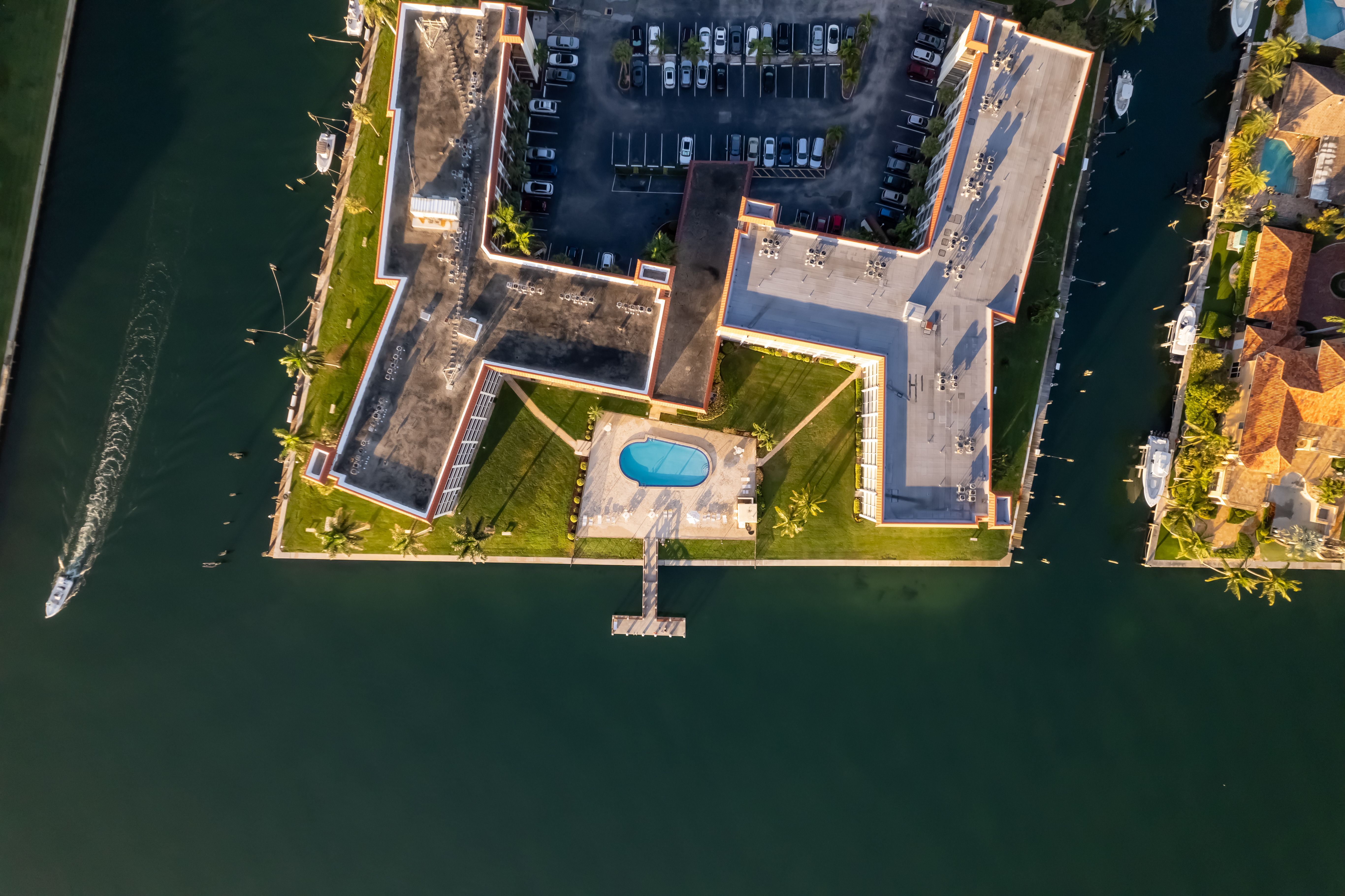
In Florida, it usually does sit on state land. Some docks need only the state's automatic consent. Others need a submerged land lease in Florida, with annual rent and paperwork that must be reassigned after closing. Pinellas had 52,174 registered vessels in 2024, per the Florida Department of Highway Safety and Motor Vehicles, so boat lifts and long docks are part of the market here.
Who Owns the Land Under My Dock?
In most of Florida, the state owns the land under your dock. Land below the mean high water line of tidal waters is sovereign submerged land. Florida took title at statehood in 1845 and holds it in trust for the public, according to the Florida DEP. Your deed usually stops at the water. Your dock reaches past it.
The exception: some man-made canals were dug from private upland and platted with the lots, so the bottom is private, as in the Palm Beach County case Galetka v. Schaaf. Only the deeds and plats can tell you which applies.
Dock Riparian Rights in Florida
What you do own are riparian rights. Under Section 253.141, they include getting in and out of the water, boating, bathing, and fishing, and they pass to you at closing even if the deed never mentions them. They don't include the right to build whatever you want over state land.
They also protect you from neighbors: under Rule 18-21.004, docks generally sit at least 25 feet inside the owner's riparian lines.
When You Need a Submerged Land Lease in Florida
Rule 18-21.005 sets three levels of approval. The simplest is consent by rule, which is automatic and free: the dock must be the only one on the parcel and qualify for the state permit exemption, which under Section 403.813 means up to 1,000 square feet of over-water area (500 in Outstanding Florida Waters). Next is a letter of consent, written approval with no rent, which covers a minimum-size dock or one using no more than 10 square feet of state bottom per foot of shoreline, so 80 feet of shoreline allows 800 square feet. Any private residential dock that doesn't qualify for either needs a lease with annual rent.
Dock Rules in Boca Ciega Bay and Treasure Island
Much of Pinellas's water sits in the Boca Ciega Bay and Pinellas County aquatic preserves. Under Section 258.396, Boca Ciega Bay runs along the bay side of Long Key, Treasure Island, and Sand Key. Most preserves block automatic consent, but these two make an exception for single-family docks.
The limit is size. Rule 18-20.019 caps terminal platforms at 100 or 250 square feet depending on the zone, and platforms plus non-compliant covered slips at 500 square feet combined in less sensitive zones. Docks built before September 29, 1997 can be rebuilt, but design changes must comply.
How Much Does a Submerged Land Lease Cost?
Under Rule 18-21.011, a home dock pays the greater of the base rate times square footage or the minimum fee. The DEP's 2026-27 rate sheet sets:
- Base rate: $0.2259 per square foot per year (doubled in preserve areas with mostly natural shoreline)
- Minimum annual fee: $677.58, roughly $56 a month
- New leases: a one-time 25 percent surcharge on the first year
- Late payments: 12 percent per year
The rent rarely kills a deal. An unauthorized dock with back rent, or a lapsed lease, can.
The Closing Surprise: The Lease Doesn't Transfer on Its Own
According to Lowndes, a Florida real estate law firm, the state won't approve assigning a lease until the deed is recorded. DEP then issues the buyer a new lease for only the time left on the old one, and renewal is at the state's discretion. Assignments go through the Division of State Lands (850-245-2555), and fees must be current first.
Illustrative Scenario: The 1,400-Square-Foot Dock
Consider a $2.4 million home on the bay side of Treasure Island with 80 feet of seawall and a dock, covered lift, and platform totaling 1,400 square feet. That's past both the 800-square-foot consent limit and the 1,000-square-foot exemption, so it needs a lease. Rent is just the $677.58 minimum. Because the home sits in the Boca Ciega Bay preserve, a dock that size most likely exists only because it was built before the September 29, 1997 rules, which means it can be rebuilt as is but not redesigned.
The real questions: Does a lease exist? Are fees current? Has it been expanded since 1997, and could it be rebuilt at the same size after a hurricane? Answer those during inspection, and the buyer closes, files the assignment, and calendars the renewal.
A 5-Step Due Diligence Checklist
- Pull the permit history. Pinellas County's Water and Navigation section permits docks countywide. Search the Access Portal by address.
- Get every state authorization from the seller: letter of consent, lease, amendments, and fee receipts.
- Run the 10-to-1 math. Divide the dock's total square footage by shoreline feet from the survey. Over 10 means a lease.
- Confirm with the state. Call the Division of State Lands to verify lease status, fees, and expiration date.
- Write it into the contract. Require lease documents, fees current through closing, and seller help with the assignment.
Pros of a leased dock: proof it's authorized, and modest rent. Cons: reassignment after closing, a shortened term, and rebuild limits.
For the dock itself, see where to find the best boat dock homes in St. Petersburg and Tampa Bay, and since docks tie into the wall, our guide to seawall inspection and replacement cost in Pinellas County.
Frequently Asked Questions
Who owns the land under my dock in Florida?
In most cases, the State of Florida does. Land below the mean high water line of tidal waters is sovereign submerged land, held in trust for the public and managed by the Board of Trustees of the Internal Improvement Trust Fund. Some man-made canals dug from private upland are an exception, where the canal bottom passes with the platted lots. Deeds and plats decide which applies.
Do I need a submerged land lease for my dock?
Only if the dock doesn't qualify for consent by rule or a letter of consent. Small single-family docks that meet the state permit exemption can qualify automatically. A dock that covers more than 10 square feet of state bottom per linear foot of shoreline, or that doesn't meet other consent criteria, generally needs a lease. Most aquatic preserves rule out automatic consent, though single-family docks in Boca Ciega Bay and Pinellas County preserves are an exception.
How much does a submerged land lease cost in Florida?
For leases effective March 1, 2026, DEP's base rate is $0.2259 per square foot per year, with a minimum annual fee of $677.58. The rate doubles in qualifying aquatic preserve areas with mostly natural shoreline. New leases carry a one-time 25 percent surcharge on the first year, and late payments accrue 12 percent annual interest.
Does a submerged land lease transfer when I buy the house?
Not automatically. The state won't approve the assignment until the deed is recorded. DEP then issues a new lease to the buyer covering only the remaining term of the old one. The new owner records the lease in the county and sends DEP a recorded copy. Renewal after that is at the Board of Trustees' discretion.
What are riparian rights in Florida?
Riparian rights are rights that come with land bordering navigable water: getting in and out, boating, bathing, and fishing. Under Section 253.141, they pass with the land at closing even if the deed doesn't mention them. They don't include ownership of the bay bottom or an unlimited right to build structures on state land.
Can my neighbor build a dock right in front of my property?
Generally, no. State rules require docks and pilings to sit at least 25 feet inside the owner's own riparian lines, or 10 feet for marginal docks. The setback doesn't apply to parcels with less than 65 feet of shoreline, shared docks, or when the neighbor agrees in writing. Disputes over riparian lines are resolved by the courts.
Know What You're Buying Below the Waterline
A submerged land lease in Florida isn't a reason to walk away from a great waterfront home. Ask for the lease, verify it with the state, measure the dock, and protect yourself in the contract.
Shopping waterfront in St. Petersburg or Tampa Bay? Talk to the Eagan Luxury team before you write an offer.
This article is general information, not legal advice. Talk to a Florida real estate attorney and licensed surveyor about any specific property.

About Debi Eagan
Expert real estate agent specializing in St. Petersburg and surrounding areas. Helping families find their dream homes with personalized service and local market expertise.
Contact Debi Eagan