

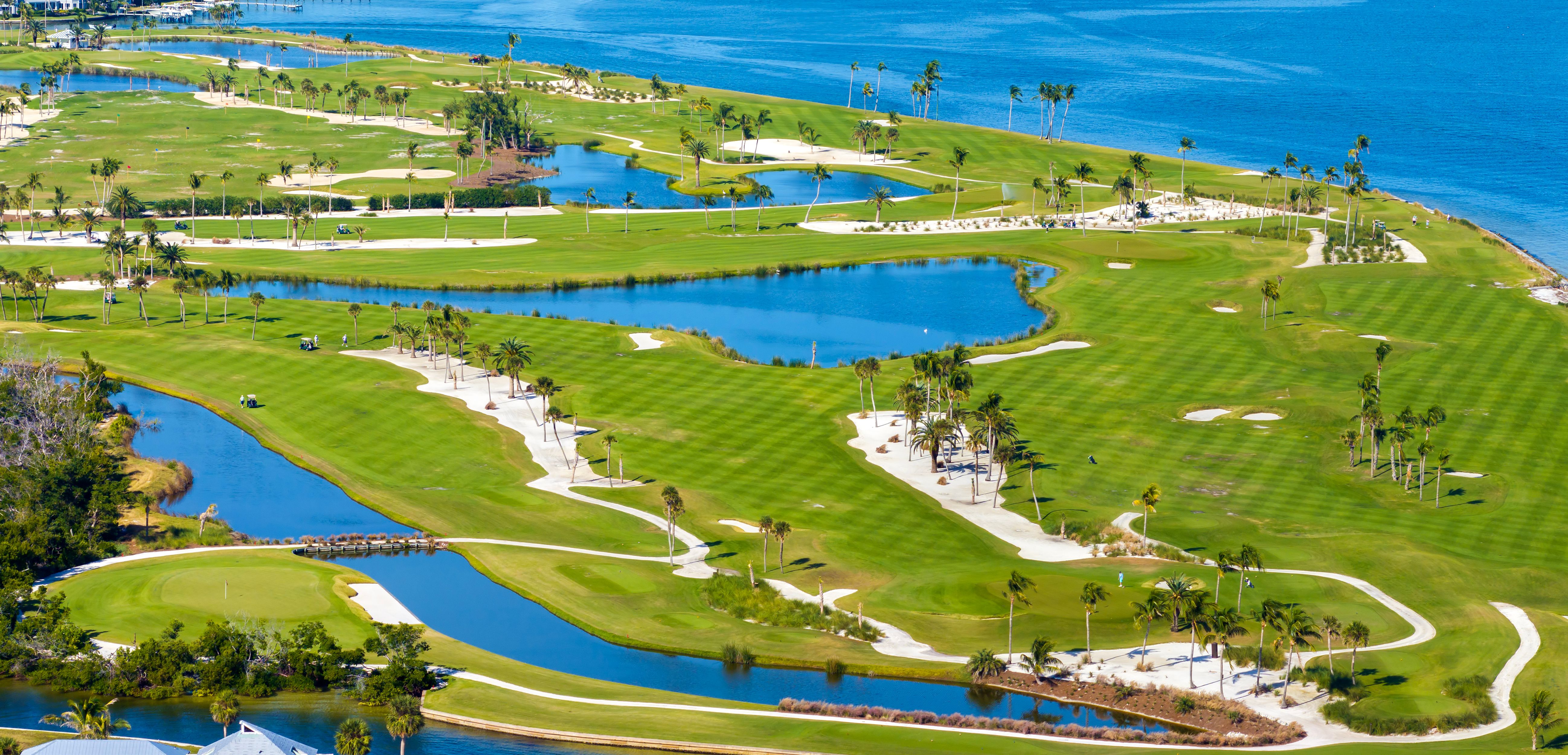
You are looking at homes in St. Pete, and the golf question keeps coming up. Which clubs are actually private? Which ones have a waiting list? Does buying a house inside a gated golf community automatically get you a tee time?
Nobody publishes clean answers. Club websites are vague on purpose, and most "best golf courses" lists mix in municipal tracks and resort courses anyone can book.
By the end of this guide you will know the five best private golf clubs in St. Petersburg, Florida, the honest pros and cons of each, and how the joining process actually works from first tour to approved member.
The 5 Best Private Golf Clubs in St. Petersburg at a Glance
The five best private golf clubs in the St. Petersburg area are St. Petersburg Country Club, Pasadena Yacht & Country Club, Isla Del Sol Yacht & Country Club, The Bayou Club, and Feather Sound Country Club. Two are member-owned, two sit inside gated residential communities, and one is the only Tom Fazio design in Pinellas County. All five are genuinely private, meaning you need a membership or a member's invitation to play.
A note on geography before we go further. St. Petersburg Country Club and Isla Del Sol are inside St. Pete city limits. Pasadena Yacht & Country Club sits just west of the city near Gulfport. The Bayou Club is in Largo and Feather Sound is in Clearwater, both roughly 20 to 30 minutes from downtown St. Pete depending on traffic. We included them because St. Pete buyers shop them, and pretending otherwise would leave you with an incomplete list.
Golf demand is the reason any of this is competitive. According to the National Golf Foundation, 29.1 million Americans played on a golf course in 2025, part of a record 48.1 million total participants when you include simulators and driving ranges. That was the eighth straight year of on-course growth. Florida absorbs more of that demand than any other state, with 1,290 golf courses at the start of 2026, more than California, New York, or Texas.
More golfers, roughly the same number of clubs. That is the whole story behind the waitlists.
We ranked on four things: course pedigree, difficulty and condition of the layout, depth of non-golf amenities, and how the club fits the surrounding real estate market. Everything below comes from club materials and published course records.
1. St. Petersburg Country Club
The most historically significant private club actually inside city limits. Founded in 1924, the course was originally laid out by Golden Age architect Herbert Strong, and the club (then known as Lakewood Country Club) hosted the PGA Tour's St. Petersburg Open through the late 1950s and early 1960s. Raymond Floyd won there in 1963 at age 20.
It is member-owned and member-operated, which matters more than most buyers realize. Members vote. There is no outside ownership group setting dues to hit a return target.
The club recently completed a full renovation of the 18-hole championship course with design consultation from PGA Tour veteran Gary Koch, plus a new pro shop, cart facility, and clubhouse updates. Nine tennis courts and six pickleball courts round it out.
Pros
- Real tournament history and a Golden Age architectural pedigree
- Member-owned, so members control dues, capital projects, and access
- Just-completed course renovation, so you are not buying into deferred maintenance
- Central St. Pete location with no gate requirement, meaning you can live anywhere in the city and belong
Cons
- There is currently a wait list for membership, per the club's own site
- Membership tours are limited to Tuesday through Friday and should be booked about a week ahead
- No marina, so boating members will look elsewhere
- Older clubhouse infrastructure means capital assessments are a realistic ongoing cost
Best for: Buyers who want traditional, historic, member-run golf and do not need a boat slip.
2. Pasadena Yacht & Country Club
The only club on this list that pairs championship golf with a working deep-water marina, all behind a single gate.
The course opened at the end of 1924 as Bear Creek Golf and Country Club, designed by Wayne Stiles and John Van Kleek with Walter Hagen serving as the first club professional while he was winning the 1924 British Open and PGA Championship. Arnold Palmer renovated the layout in the 1980s. It plays to 6,588 yards, par 72, across roughly 300 acres along Boca Ciega Bay.
The marina holds 82 boat slips and is described by the club as one of West Florida's most protected, which is no small thing on this coast. Deep-water dockominiums are available to buy or lease.
Pros
- Golf and a protected deep-water marina inside one gated community
- Genuine architectural history with an Arnold Palmer renovation
- Three dining venues, Jr. Olympic pool, fitness center, renovated tennis and pickleball
- Minutes from Treasure Island, St. Pete Beach, and downtown St. Pete
Cons
- Fairways are tight, hemmed in by housing, water, and out of bounds, so it plays harder than the yardage suggests
- Gated community setting means your housing options are limited to what is for sale inside the gate
- Boat slips are a separate cost from the club membership
- Less clubhouse polish than newer clubs in the region
Best for: The buyer who golfs and boats, and wants both within walking distance of the same front door.
3. Isla Del Sol Yacht & Country Club
A barrier island club sitting between the southern tip of St. Petersburg and St. Pete Beach, just north of Tierra Verde. If your priority is water views on every hole, this is the one.
The course opened in 1977 to a Mark Mahannah design and plays 6,392 yards to a par of 71. All eighteen holes bring water into play. The signature is the par-4 8th, which asks for an approach over water to an island green. Fairways are narrow and condominium-lined, so accuracy beats power here.
The club is private and member-owned, with nine clay tennis courts, a fitness center, dining, a marina, and a pool over Boca Ciega Bay.
Pros
- Bayfront setting with water in play on every hole, which is rare even in Florida
- Member-owned with a genuine island-club culture
- Clay tennis courts, marina access, and beach proximity all in one place
- Broad real estate mix from condos to single-family homes, so entry points vary widely
Cons
- At 6,392 yards it is a shorter, tighter test, and low-handicap players looking for length may find it limited
- Narrow condo-lined corridors punish wayward drivers
- Barrier island location carries real hurricane and flood insurance implications worth pricing before you buy
- Bridge access means one route on and off the island
Best for: Buyers who want beach access, boating, and golf within a few minutes of each other and value the setting as much as the scorecard.
4. The Bayou Club
The best pure golf course on this list, and the argument is not close among people who have played all five.
Opened in 1991, it is the only Tom Fazio signature design in Pinellas County. The layout runs through oaks, pines, marshes, and bayous across roughly 150 acres, with water in play on 16 of 18 holes and an unusual routing: back-to-back par 5s on the front nine, back-to-back par 3s on the back. It stretches past 7,000 yards with a slope in the 140s from the tips, and holes 15 through 18 are known locally as the "Final Four." The 16th asks for roughly a 200-yard carry from the championship tee with almost no bail-out.
Pros
- Tom Fazio pedigree and the strongest championship test in the county
- Consistently well-regarded conditioning and a well-appointed men's locker room and clubhouse
- Gated community with mature landscaping and genuine wildlife (herons, otters, bald eagles)
- Full amenity set including tennis, pool, and 24-hour fitness
Cons
- It is in Largo, not St. Petersburg, so factor a 25 to 30 minute drive to downtown
- Water on 16 holes and a 144 slope make it a punishing course for high handicaps
- Access policy has shifted over the years and some directories list it as semi-private, so confirm current status directly with the club
- The community is smaller, so inventory is thin and you may wait for the right home
Best for: The serious golfer who will pick the golf course over the commute every single time.
5. Feather Sound Country Club
The centrally located option. Feather Sound sits almost exactly between St. Petersburg, Clearwater, and Tampa, which makes it the practical choice for buyers who work across the bay.
The Joe Lee signature course dates to the mid-1970s and was later redesigned by Bob Cupp, with further work by Kipp Schulties. It stretches to roughly 6,900 yards from the championship tees. The island-green 14th draws frequent comparisons to the 17th at TPC Sawgrass. The club hosted the JCPenney Classic mixed-team event from 1990 to 1998.
Nine Har-Tru tennis courts, tour-quality practice facilities, and memberships split into Golf, Tennis, and Clubhouse tiers.
Pros
- Best location for households splitting time between Pinellas and Hillsborough counties
- Real tournament history and a course that plays as a legitimate test at 6,900 yards
- Tiered memberships (Golf, Tennis, Clubhouse) create more affordable entry points
- Non-equity structure has historically meant more flexibility on outside and guest play
Cons
- Clubhouse and facilities are generally considered a step below the top-tier clubs on this list
- Airport-adjacent location lacks the water views of Isla Del Sol or Pasadena
- Non-equity means members do not own the club or control its direction
- Reviews on service and value are more mixed than at the member-owned clubs
Best for: Buyers who want strong golf without a barrier-island premium, and who commute across the bay.
What Membership Actually Costs (and Why Nobody Will Tell You)
None of these five clubs publish initiation fees or dues. That is standard practice, not evasion. Fees change, categories differ, and clubs prefer that conversation in person.
What we can tell you is what happened to the market. Front Office Sports reported that median country club initiation fees nationally rose from $29,000 in 2019 to $50,000 in 2022, a 72% increase in three years. Waitlists lengthened at the same time.
Budget for three separate numbers, not one:
- Initiation fee. A one-time payment. May be partly refundable at an equity club, typically not at a non-equity club.
- Annual dues. Ongoing, billed monthly or quarterly, and usually tiered by membership category.
- Everything else. Food and beverage minimums, cart fees, trail fees, locker fees, and capital assessments. Assessments are the line item that surprises new members most, because boards can levy them for renovations with limited member approval.
Ask for all three in writing before you sign anything. A club that will not put dues history in writing is telling you something.
How to Join a Private Golf Club in St. Petersburg | The 7-Step Process
Here is the actual sequence at most Pinellas County clubs. Plan on 30 to 120 days from first call to first tee time, longer if there is a waitlist.
- Call the membership director, not the pro shop. Every club on this list has one. St. Petersburg Country Club, for example, schedules tours Tuesday through Friday and asks for about a week's notice.
- Take the tour and play the course. Ask to play if you can. A club that will not let a serious prospect see the course is not a club you want.
- Request the full fee schedule in writing. Initiation, dues by category, F&B minimum, cart and trail fees, and the assessment history for the past five years. That last one is the tell.
- Confirm whether real estate is required. At The Bayou Club and Pasadena, the club and the residential community are linked. At St. Petersburg Country Club and Feather Sound, they are not. This single question changes your entire home search.
- Find your sponsors. Most private clubs require one or two current members to sponsor your application. If you do not know anyone, say so early. Membership directors make introductions, and playing in a few member-guest events is the normal path.
- Submit the application and go before the board or committee. Expect a background and financial review. Some clubs interview the whole household.
- Get your approval and your effective date. Confirm in writing when dues start, when your account opens, and what your first-year billing actually looks like.
If you are relocating, start step one before you close on a house. Waitlist position and home purchase are separate processes, and running them in parallel can save you a season.
What This Means for Your Home Search
The club decision and the house decision are not the same decision, and treating them as one is the most common mistake we see.
Consider a couple relocating from Chicago with a $900,000 budget. They fall in love with a home inside the Bayou Club community, close in March, and then learn the golf membership has its own application, its own fee, and its own timeline. They own the house. They are not yet members. That is a legal and financial reality at plenty of golf communities, and it is entirely avoidable by asking step four above before writing an offer.
Now consider a retiree from Ohio who wants golf and a boat. Pasadena solves both inside one gate, but the slip is a separate purchase from the membership, and inventory behind that gate is finite. If the right house is not listed, do not force a bad one. Join first, get inside the community, and be the person who hears about the listing before it hits the MLS.
On pricing: according to Florida Realtors and Stellar MLS data for Pinellas County, the county's median single-family sale price was $476,200 in May 2026, up 3.5% year over year. Homes inside established golf communities sit well above that median, and barrier island properties like Isla Del Sol carry insurance costs that need to be quoted, not estimated.
Frequently Asked Questions
How much does a private golf club membership cost in St. Petersburg?
None of the five clubs publish their fees, so the honest answer is that you have to ask each one directly. What is documented is the national trend: median country club initiation fees rose from $29,000 in 2019 to $50,000 in 2022 according to Front Office Sports. Budget separately for initiation, annual dues, food and beverage minimums, and capital assessments, which are billed independently of dues.
Can you play a private golf course in St. Petersburg without a membership?
Generally no. All five clubs require a membership or a member's invitation as a guest. Some private clubs also honor reciprocal arrangements if you belong to a club elsewhere, and a few allow limited outside play during the slow summer months. Policies change year to year, so the only reliable answer comes from calling the pro shop directly.
Do you have to live in the community to join the club?
It depends on the club. Pasadena Yacht & Country Club and The Bayou Club are both tied to gated residential communities. St. Petersburg Country Club and Feather Sound Country Club are not, meaning you can live anywhere in the area and hold a membership. Confirm the requirement before you make an offer on a home, because it can reverse your search order entirely.
Which private club near St. Petersburg has the best golf course?
By architectural pedigree and championship difficulty, The Bayou Club is the strongest test. It is the only Tom Fazio signature design in Pinellas County, plays past 7,000 yards with a slope in the 140s, and has water on 16 of 18 holes. St. Petersburg Country Club has the deeper tournament history, and Isla Del Sol has the best setting.
Is joining a private golf club worth it?
It depends on how often you play and what else you use. Break the math down: divide your total annual cost by expected rounds. If you play 60 rounds a year, a club costing $18,000 all-in works out to roughly $300 per round, which is competitive with peak-season public rates on this coast. If you play 15 rounds, it is not. Dining, tennis, fitness, and social access change that calculation.
How long is the wait to join a private club in St. Petersburg?
Varies widely by club and by membership category. St. Petersburg Country Club currently notes a wait list on its own membership page. Some clubs move a candidate through in 30 to 60 days, others hold multi-year lists for full golf categories while admitting social or tennis members quickly. Ask for your specific position on the list, in writing.
The Bottom Line
The five best private golf clubs in St. Petersburg, Florida each solve a different problem. St. Petersburg Country Club gives you history and member control. Pasadena Yacht & Country Club gives you golf and a protected marina behind one gate. Isla Del Sol gives you the island setting. The Bayou Club gives you the best golf course in the county. Feather Sound gives you the location and the most flexible entry points.
The mistake is picking the house first and discovering the club rules afterward. Call membership directors before you tour homes. Get the fee schedule in writing. Ask whether real estate is required. Then go find the house.
If you are relocating to St. Pete and weighing golf communities, Eagan Luxury can walk you through which clubs are currently admitting members, what is available inside each gate, and what the total cost of ownership actually looks like. Schedule a consultation to get a straight answer before you start touring.

About Debi Eagan
Expert real estate agent specializing in St. Petersburg and surrounding areas. Helping families find their dream homes with personalized service and local market expertise.
Contact Debi Eagan