

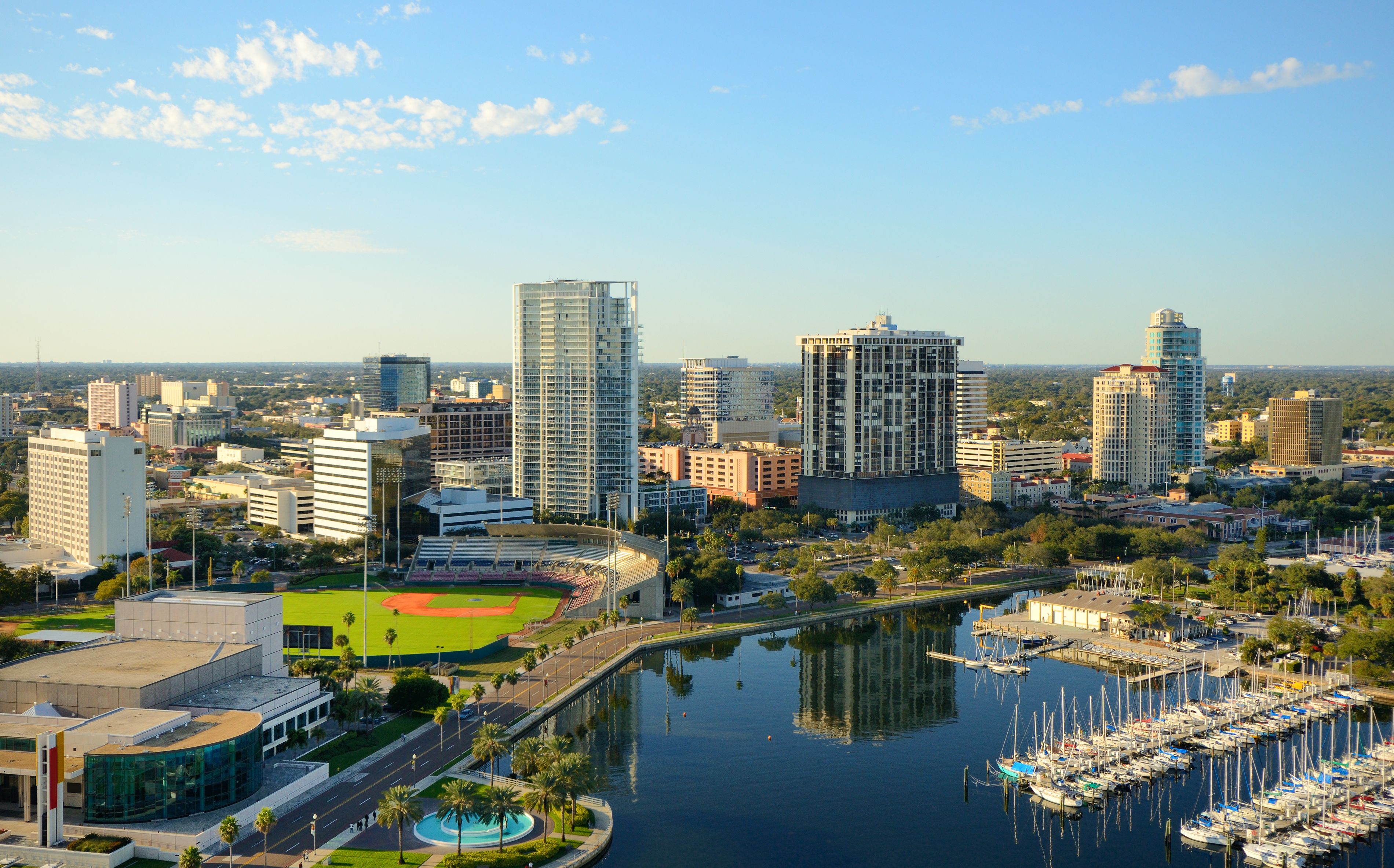
Tampa Bay is one of the few Sun Belt markets where commercial real estate fundamentals across multiple asset classes are performing simultaneously. Retail vacancy is tight. Industrial demand is structural. Population growth is sustained. And the tax environment removes a cost layer that investors in most other major markets absorb as a baseline.
This is not a market that is performing well in one category. It is performing across categories, which is what makes it worth serious capital allocation analysis in 2026.
A Diverse Economy That Sustains Tenant Demand
Unlike markets built on a single industry, Tampa Bay operates across finance, healthcare, defense, marine science, and technology. Hillsborough County grew by approximately 15 percent between 2015 and 2023 according to US Census data, and that growth has been accompanied by sustained corporate relocation activity that absorbs commercial inventory across asset classes.
The practical result for investors is a tenant base that does not move in lockstep with any single sector downturn. When office demand softens, industrial and retail often remain stable. That diversification is a structural advantage that single-industry markets like energy or tourism-dependent metros cannot replicate.
Retail Sector Performance That Leads the Nation
The retail story in Tampa Bay is driven by supply constraints rather than speculative demand. According to CoStar's retail market data, Tampa has ranked among the top markets nationally for retail rent growth over recent five-year periods, with market availability for retail space currently hovering below four percent.
A significant portion of that available space sits in older buildings that are functionally obsolete for modern retail tenants. This creates a two-sided opportunity: investors who acquire older retail assets at discounted basis can reposition them for current tenant demand, while investors in stabilized modern retail benefit from the supply constraint driving rent growth in their category.
Industrial and Logistics Demand Built on Infrastructure
The Port of Tampa Bay is the largest port in Florida by tonnage. Combined with Interstate 4, Interstate 75, and Tampa International Airport, the region sits at a logistics crossroads that has driven sustained industrial demand well beyond the pandemic-era e-commerce surge.
Industrial cap rates in Tampa Bay currently range from approximately 5.5 to 7 percent depending on asset quality, location, and lease structure. Modern bulk distribution facilities near the port and major highway interchanges command the tightest cap rates, while older light industrial and flex product in secondary locations offers higher yield and value-add potential. As supply chains continue to prioritize proximity to major population centers, Tampa Bay's position within a two-hour drive of over 8 million people strengthens the long-term case for industrial allocation here.
Population Growth and the Commercial Demand It Creates
Visit Tampa Bay reports millions of annual visitors, and the permanent population base continues to expand at a rate that requires continuous commercial infrastructure buildout. Medical office, neighborhood retail, and mixed-use development all benefit from population density growth in ways that are more predictable than discretionary spending categories.
The neighborhoods experiencing the most active commercial development currently include the Grand Central District and Edge District in St. Petersburg, Ybor City in Tampa, and emerging mixed-use corridors near Westshore. These areas present adaptive reuse opportunities where older commercial buildings are being repositioned for office, food and beverage, and creative tenants. Investors who understand the neighborhood-level dynamics in these corridors are finding basis advantages that core institutional buyers cannot access.
A Scenario Worth Analyzing
An investor acquires a 12,000 square foot retail strip center in a St. Petersburg corridor transitioning from light industrial to mixed-use in 2023. The center is 60 percent occupied at below-market rents with three leases rolling within 18 months. The investor repositions the vacant bays for food and beverage tenants, marks existing leases to market at renewal, and stabilizes the asset at full occupancy within 24 months. The exit cap rate on the stabilized asset reflects the corridor's improved tenant mix and proximity to residential density. The value creation occurred not from market appreciation alone but from operational repositioning executed with knowledge of where the neighborhood was heading.
This is the value-add model that Tampa Bay's evolving neighborhoods currently support at scale.
The Florida Tax Advantage
Florida's absence of a state income tax and its generally pro-business regulatory environment are not incidental to the investment case. They are structural. For investors comparing net returns across markets, the Florida tax environment removes a cost layer that investors in California, New York, and Illinois absorb as a baseline. The Florida Department of Revenue provides specific guidance on business tax structure for investors evaluating entity formation and operating structures in the state.
This advantage compounds over time for long-term holders and is a recurring factor in corporate relocation decisions that drive the tenant demand underpinning commercial property performance.
How to Position Yourself in This Market
Successful commercial investment in Tampa Bay requires asset-class clarity, neighborhood-level knowledge, and the ability to move decisively when underpriced assets come to market. Core institutional buyers dominate stabilized assets in prime locations. The strongest risk-adjusted returns for non-institutional investors typically come from value-add acquisitions in transitioning corridors, where local knowledge of tenant demand and neighborhood trajectory provides a genuine edge over capital allocating from a distance.
Partnering with an advisor who has completed transactions in the specific submarkets you are targeting is not optional at this level of capital commitment. Market-level data is widely available. Submarket-level execution knowledge is not.
Frequently Asked Questions
What cap rates should I expect for commercial real estate in Tampa Bay?
Cap rates in Tampa Bay vary significantly by asset class and location. Industrial assets in well-located logistics corridors currently trade between 5.5 and 7 percent. Retail in high-demand corridors with strong tenancy trades at similar or tighter levels. Value-add and older assets in transitioning neighborhoods offer higher going-in yields in exchange for repositioning execution risk. Confirm current cap rate ranges with a local advisor before underwriting any specific acquisition.
Which commercial asset class performs best in Tampa Bay?
Retail and industrial have been the strongest performers in recent years. Retail benefits from severe supply constraints and rent growth that CoStar has ranked among the highest nationally. Industrial benefits from the Port of Tampa Bay logistics infrastructure and sustained e-commerce and distribution demand. Office performance is more variable and submarket-dependent. Medical office near major hospital systems has shown consistent strength.
What are the risks of investing in Tampa Bay commercial real estate?
Primary risks include hurricane exposure and the insurance cost implications that come with Gulf Coast positioning, interest rate sensitivity on leveraged acquisitions, and submarket selection risk in transitioning neighborhoods where repositioning timelines can extend beyond initial projections. Buyers should also conduct thorough environmental due diligence on industrial and older commercial properties, particularly those near port and industrial corridors with legacy use histories.
How does Florida's tax environment affect commercial real estate returns?
Florida has no state income tax, which removes a cost layer that investors in states like California, New York, and Illinois absorb as a baseline. For investors comparing net returns across markets, this structural advantage compounds over time and is particularly significant for long-term holders. Entity structure and operating structure should be reviewed with a Florida-based tax advisor before closing on any commercial acquisition.
Is Tampa Bay commercial real estate a good market for out-of-state investors?
Yes, but submarket knowledge matters significantly. Market-level data showing strong Tampa Bay fundamentals is widely available and already priced into core asset valuations. The strongest opportunities for out-of-state investors typically require local advisor relationships that provide access to off-market inventory and neighborhood-level intelligence that institutional buyers competing for the same assets do not have. Remote underwriting based on market-level data alone typically results in paying core pricing for value-add risk.

About Debi Eagan
Expert real estate agent specializing in St. Petersburg and surrounding areas. Helping families find their dream homes with personalized service and local market expertise.
Contact Debi Eagan