

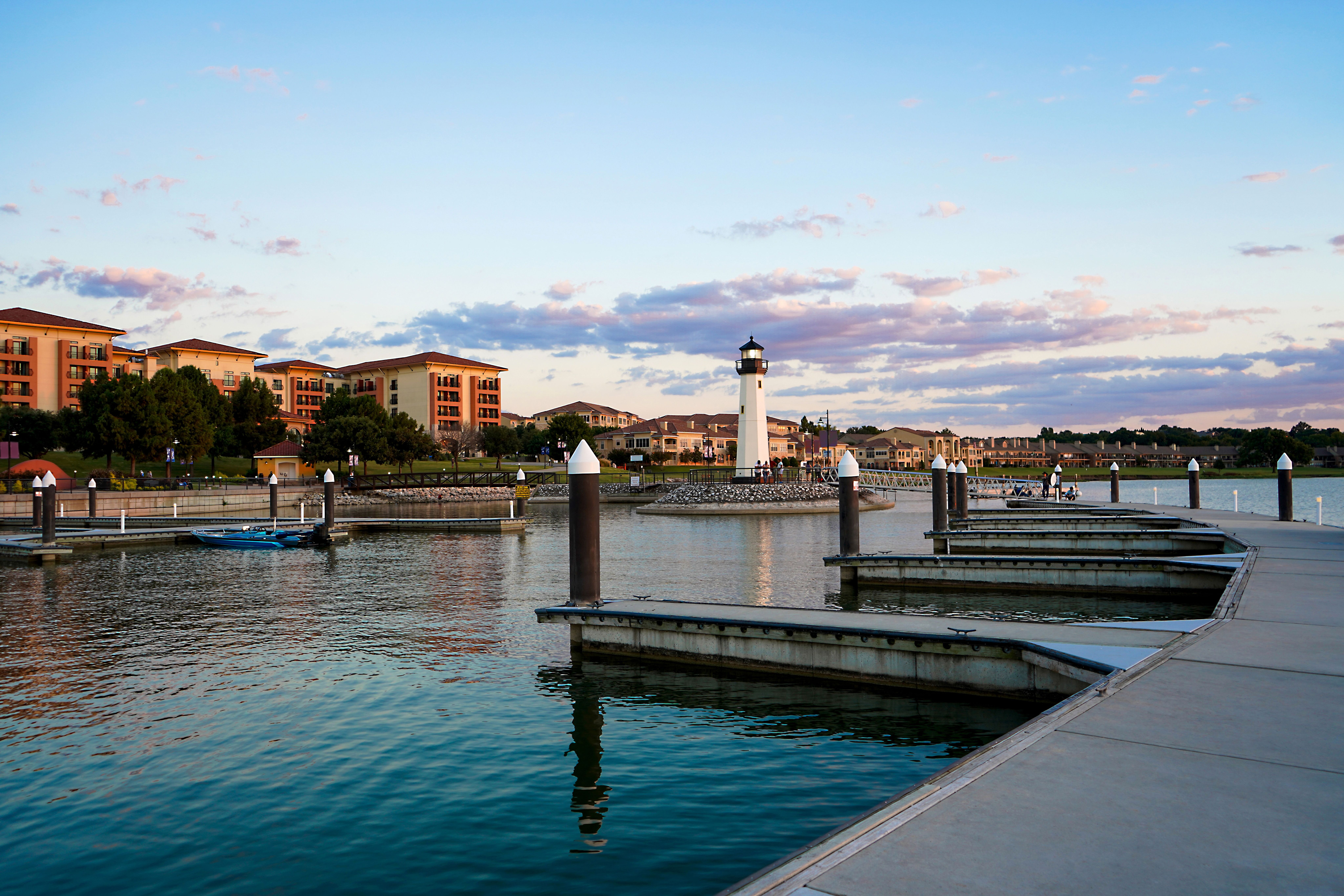
You want water. A dock, a view, a sunset off the back porch. But every listing looks the same online, and nobody tells you the part that actually matters: which neighborhoods hold value, which ones flooded in 2024, and what it costs to insure any of it.
Most "best waterfront neighborhoods" articles are a list of pretty names with no numbers attached. That is not useful when you are about to spend seven figures.
By the end of this guide you will know the six top waterfront neighborhoods in the Tampa Bay Gulf Coast region, real price ranges for each, the honest pros and cons, and the eight things you must verify before you write an offer on any waterfront home in this market.
The 6 Top Waterfront Neighborhoods at a Glance
The six top waterfront neighborhoods in the Tampa Bay Gulf Coast region are Snell Isle in St. Petersburg, Davis Islands in Tampa, Tierra Verde in south Pinellas, Island Estates in Clearwater, MiraBay in Apollo Beach, and Anna Maria Island in Manatee County. They span roughly $600,000 to $10 million, cover bay-front, Gulf-front, and canal-front living, and each solves a different problem for a different buyer.
One thing to say up front. Hurricanes Helene and Milton hit this coastline in 2024, and nearly 16,000 homes were damaged in St. Petersburg alone according to the St. Pete Catalyst. Every neighborhood below has homes that flooded and homes that did not. Elevation, not zip code, is what separated them. We cover exactly how to check that further down.
How We Picked These Six
We weighted four things: water access quality (depth, bridge clearance, how long to open water), housing stock and price range, community character and amenities, and post-2024 resilience. All price figures below are attributed to a named source and dated, because waterfront micro-markets move fast and a stale number is worse than no number.
1. Snell Isle, St. Petersburg
The benchmark for luxury waterfront in Pinellas County. Perry Snell developed the island starting in the 1920s, and the streets still carry that Mediterranean Revival character alongside a growing number of elevated new builds.
Snell Isle sits on Tampa Bay with deep-water docks that handle 40 to 60 foot vessels, and open-bay access to the Skyway or the Gulf without a long channel run. As of January 2026, Redfin data reported a median sale price near $1.5 million for the neighborhood, though the sales base is small enough that a single trophy closing moves the number.
There is no mandatory island-wide HOA. The Snell Isle Property Owners Association is voluntary.
Pros
- Deepest, most usable boat water of any luxury neighborhood in St. Pete
- Walking distance to Coffee Pot Bayou and minutes to downtown St. Petersburg
- No mandatory HOA, so no board telling you what color to paint the house
- Strong teardown market, meaning older homes carry land value even when the structure does not
Cons
- Waterfront parcels commonly carry base flood elevations in the 10 to 12 foot range, so older ground-level homes face real elevation math
- Small sales volume makes pricing volatile and comps hard to pin down
- Entry point for a renovated waterfront home with a dock generally starts around $1.5 million
- Insurance and elevation certificates will drive your carrying cost more than the mortgage rate will
Best for: The boat-first luxury buyer who wants a St. Pete address and deep water at the dock.
2. Davis Islands, Tampa
A pair of connected islands at the mouth of the Hillsborough River, built in the 1920s by developer D.P. Davis. It functions like a small town: a village center, tree-lined streets with no traffic lights, its own yacht club, and its own general aviation airport.
Housing stock runs from preserved 1920s Mediterranean Revival homes to contemporary custom estates and townhomes. One 2026 market guide reports a median sale price near $1.08 million against a median listing price around $2.2 million, a spread that tells you exactly how wide the product range is. Waterfront estates reach well into eight figures.
Pros
- Genuine walkable village with restaurants, shops, and a public pool
- Minutes from downtown Tampa and Tampa General Hospital
- Multiple entry points, from smaller bungalows and townhomes up to bayfront estates
- Strong, stable demand from South Tampa professionals and physicians
Cons
- Single causeway access, which matters during evacuations and rush hour
- The listing-to-sale price spread means asking prices are often aspirational
- Older 1920s housing stock brings 1920s systems, foundations, and code issues
- Hillsborough Bay water is shallower in spots than Pinellas deep-water canals, so verify draft and clearance
Best for: Buyers who want island character without leaving the city, and who value walkability over dock depth.
3. Tierra Verde, Pinellas County
An unincorporated island community at the south end of the Pinellas Bayway, sitting between St. Petersburg and St. Pete Beach, next door to Fort De Soto Park. It is quieter and more residential than St. Pete Beach, with a serious boating culture and a canal system that reaches the Gulf through Boca Ciega Bay.
As of March 2026, Zillow's home value index for Tierra Verde was $792,633. Canal homes with 10,000 to 20,000 pound lifts are common, and the waterfront range runs well past that index into the multi-millions.
Pinellas County planning documents describe Tierra Verde as a vulnerable barrier island, and many homes are elevated or use breakaway walls to meet floodplain rules. Take that seriously rather than as boilerplate.
Pros
- Quick Gulf access through the passes, which is the whole point for offshore boaters
- Fort De Soto next door, consistently ranked among the best beaches in the country
- Twenty minutes to downtown St. Pete, so it is not a remote island
- Lower entry point than Snell Isle for comparable water quality
Cons
- West side sits in VE zone and the east side in AE zone, so nearly every waterfront lot is in a mandatory flood insurance area
- Barrier island exposure means the highest insurance costs on this list
- One road on and off the island via the Bayway, with a toll
- Limited retail and dining on the island itself
Best for: Serious boaters who want Gulf access and are clear-eyed about barrier island risk.
4. Island Estates, Clearwater
A man-made residential island in Clearwater Harbor, sitting on the causeway between downtown Clearwater and Clearwater Beach. Nearly every home is waterfront in some form. The Island Estates Civic Association was founded in 1962 to preserve the residential character, later reinforced by a Neighborhood Conservation Overlay District.
Homes were primarily built in the 1960s and 1970s, ranging from stucco ranch houses to condominium towers and newer Mediterranean-style estates. The Clearwater Marine Aquarium sits at the causeway entrance. The island is self-contained, with a Publix, restaurants, a bank, and a clinic, which is unusual for a neighborhood this small.
Pros
- Walk or bike to Clearwater Beach, one of the most recognized beaches in the country
- Self-contained amenities mean you are not driving off the island for groceries
- Deed restrictions and the conservation overlay protect the residential feel from tourist creep
- Condo inventory creates genuine entry points well below the single-family waterfront price
Cons
- 1960s and 1970s ground-level housing stock is the most exposed of any neighborhood here
- Single access point via the Memorial Causeway, shared with heavy beach traffic
- Tourist traffic to Clearwater Beach runs through your front door in season
- Smaller lots and canals than Snell Isle or Tierra Verde
Best for: Beach-first buyers who want walkable sand and a real neighborhood, not a resort strip.
5. MiraBay, Apollo Beach
The value play, and the one most out-of-state buyers have never heard of. MiraBay is a gated, master-planned community on the south shore of Tampa Bay, built around a 135-acre lagoon with canals connecting to the bay. It has a private beach, a full-service marina, and a waterfront clubhouse.
One 2026 market analysis puts the practical range from the mid-$600s for smaller or original-condition homes up past $1.6 million for the largest renovated lakefront and golf estates, with average sale prices around $985,000 in 2024. The community is built out, so every purchase is a resale and condition drives price.
Notably, there is no CDD assessment on the tax bill. You pay quarterly POA dues instead.
Pros
- The most affordable true waterfront with bay access in the entire Tampa Bay market
- Resort amenity set including pools, clay tennis courts, fitness center, and free resident kayaks
- No CDD assessment, which is rare for a master-planned community of this size
- Newer housing stock than the 1920s to 1970s neighborhoods above, meaning fewer code surprises
Cons
- Roughly 30 minutes to downtown Tampa and 45 to the airport, which is a real daily cost
- Gated HOA community, so expect architectural review and rules
- The lagoon and canal system means longer runs to open bay than a direct bayfront dock
- Built out and homogeneous, so if you want architectural character this is not it
Best for: Families and relocating buyers who want boat access and amenities without a barrier island price or a barrier island risk profile.
6. Anna Maria Island, Manatee County
The southern anchor of the region and the most vacation-oriented of the six. Anna Maria offers Gulf-front property plus a substantial inventory of deep-water canal homes, with Luana Isles and Bimini Bay Estates as the two largest waterfront subdivisions. Docks reach the Gulf, Anna Maria Sound, and Tampa Bay.
The island has fought hard to stay low-rise and low-density, which is a large part of why values have held.
Pros
- True Gulf-front inventory, which Snell Isle, Davis Islands, and MiraBay cannot offer at all
- Strict height and density rules protect the island character and the views
- Strong short-term rental demand, so the property can carry itself if the rules allow it
- Genuine old-Florida feel that most of this coastline has lost
Cons
- Farthest from Tampa and St. Pete employment centers, roughly an hour or more depending on bridge traffic
- Vacation rental regulations vary by city on the island and have changed repeatedly, so verify before you underwrite rental income
- Highest tourist density of any neighborhood here during season
- Gulf-front VE zone construction requirements are the most demanding and most expensive
Best for: Second-home and investment buyers who want Gulf frontage and are not commuting.
What Waterfront Actually Costs: Insurance, Flood Zones, and the 50% Rule
This is the section nobody writes, and it is the one that changes offers.
Insurance is the real payment. Florida is the most expensive state in the country for home insurance, with an average annual rate of $6,504 for $300,000 in dwelling coverage according to Insurify. Flood is separate. The average NFIP policy for a single-family Florida home runs $1,363 a year per FEMA data, above the $1,290 national average, but that statewide average is close to meaningless on the coast. High-risk A, AE, and VE zone waterfront homes routinely price in the thousands, and exposed Gulf-front VE properties can run far higher.
Get an actual quote on the actual address before you go under contract. Not an estimate. A quote.
Understand your flood zone and your base flood elevation. AE zones cover most inland Gulf Coast waterfront. VE zones are the coastal high-hazard areas exposed to wave action, and they carry stricter pile or column foundation requirements. Your base flood elevation is the height at which there is a 1% annual chance of flooding. Pinellas County adds one foot of freeboard on top of FEMA's number, so if your BFE is 10 feet, your lowest finished floor needs to be at 11 feet or higher.
Then there is the 50% rule. This is the single most consequential regulation on this coastline, and most buyers have never heard of it. FEMA's substantial improvement and substantial damage rule limits the cost of improvements to 50% of the structure's depreciated market value, per the Pinellas County Property Appraiser. Cross that line, whether from storm damage or from a voluntary renovation, and the entire home must be brought up to current flood code, which usually means elevating it.
Two things buyers miss. First, it is 50% of the structure value, not the property value, and land is excluded. Second, many jurisdictions apply a cumulative lookback, meaning permits from prior years can stack. Interpretation also varies by jurisdiction, so a Treasure Island address and an unincorporated Pinellas address can produce different determinations on identical damage.
If you are buying a 1960s ground-level canal home with plans to renovate, run this math before you write the offer. It can add hundreds of thousands of dollars to a project.
How to Vet a Tampa Bay Waterfront Home: 8 Steps
Work this list in order. Steps 1 through 4 happen before you make an offer.
- Pull the elevation certificate. Ask the seller. If there is none, order one (typically $400 to $700 from a licensed surveyor). It tells you the finished floor elevation against the base flood elevation, and it directly drives your flood premium.
- Get a real insurance quote on the address. Windstorm and flood, quoted separately, from at least two carriers plus one private flood option. Private flood is often cheaper than NFIP for elevated or newer homes.
- Run the 50% rule math. Get the structure's depreciated value from the county property appraiser, then compare it to your renovation budget. If you are close to the line, order an independent appraisal, because the assessed structure value is frequently 20% to 40% below market and that changes the ratio.
- Check the permit history. Pull county and city permit records for the last five years, looking for post-Helene and post-Milton repair permits and any open code enforcement cases. St. Petersburg opened tracking cases on properties across its flood-zone footprint after the 2024 storms.
- Verify the water, not just the view. Measure depth at low tide, not high. Confirm bridge clearance between the dock and open water against your boat's air draft. A dock you cannot leave at low tide is a lawn ornament.
- Inspect the seawall and the dock separately. Seawall replacement is a five-figure to six-figure project and is almost never covered by insurance. Ask for the installation date and any engineering reports.
- Confirm the rental rules if income is part of your plan. Minimum lease terms vary by city, by island, and sometimes by subdivision, and they have changed repeatedly on Anna Maria Island in particular. Get it in writing from the municipality, not from a listing agent.
- Order a four-point and wind mitigation inspection early. These drive insurability. Roof age, electrical panel, and plumbing type can make a home uninsurable at any price, and you want to know that in week one, not week four.
Two Buyers, Two Different Right Answers
Consider a couple relocating from Chicago with a $900,000 budget who want a boat and a short commute to downtown Tampa. Anna Maria Island is out on commute alone. Snell Isle at that budget buys a non-waterfront home or a teardown. Davis Islands gets them into the neighborhood but likely not onto the water. MiraBay puts them on a canal with a dock, in a newer home, with money left over for the insurance. On paper it is the "lesser" address. In practice it is the only one that delivers what they said they wanted.
Now consider a retired offshore fisherman with $2 million and no commute. The calculation inverts completely. Tierra Verde or Snell Isle win on water quality, and the MiraBay lagoon run to open bay becomes a daily annoyance he will resent within a month.
Same region, same price bands, opposite answers. That is why a list of neighborhoods is not a strategy. For a deeper look at each area, browse our neighborhood guides.
For market context, according to Florida Realtors and Stellar MLS data for Pinellas County, the county's median single-family sale price was $476,200 in May 2026, up 3.5% year over year. Every neighborhood on this list trades well above that median, which tells you what the water itself is worth.
Frequently Asked Questions
What is the best waterfront neighborhood in the Tampa Bay area?
There is no single answer, because the neighborhoods optimize for different things. Snell Isle and Tierra Verde have the best boat water. Davis Islands and Island Estates have the best walkability. MiraBay offers the lowest entry price for true bay access. Anna Maria Island is the only one with genuine Gulf frontage. Start with how you will actually use the water, then narrow.
How much is flood insurance in Florida?
The average NFIP policy for a single-family Florida home is $1,363 per year according to FEMA data, above the national average of $1,290. That statewide figure is misleading for waterfront property. Homes in high-risk A, AE, and VE zones commonly pay several thousand dollars annually, and exposed Gulf-front VE properties can pay far more. Premiums now reflect individual property characteristics under FEMA's Risk Rating 2.0.
What is the FEMA 50% rule and why does it matter?
It limits improvements to a structure to 50% of that structure's depreciated market value. Exceed it, through storm damage or voluntary renovation, and the home must be brought fully up to current flood code, which usually means elevating it. Land value is excluded from the calculation. Many jurisdictions apply a cumulative lookback across multiple years of permits, and interpretations differ between municipalities.
Is buying waterfront property in Tampa Bay still a good investment after the 2024 hurricanes?
Values in these neighborhoods have held, but the risk profile is now priced in more honestly than it was before 2024. Elevated and newer construction has separated sharply from ground-level 1960s and 1970s stock. Nearly 16,000 homes were damaged in St. Petersburg alone during Helene and Milton. The relevant question is not the neighborhood but the specific home's elevation and construction.
Do I need flood insurance if the home is not in a high-risk zone?
Not legally, unless a federally backed lender requires it in a Special Flood Hazard Area. It is still strongly advised. A significant share of national flood claims come from properties outside high-risk zones, and standard homeowners policies do not cover flood damage of any kind. Zone X premiums are comparatively inexpensive, which makes the coverage easy to justify.
What is a base flood elevation and how do I find mine?
Base flood elevation is the height at which a property has a 1% annual chance of flooding, commonly called the 100-year flood line. You find it on the property's elevation certificate or on FEMA's flood map service for the address. Pinellas County requires one additional foot of freeboard above the FEMA number, so your required finished floor sits higher than the BFE itself.
The Bottom Line
The six top waterfront neighborhoods in the Tampa Bay Gulf Coast region are not interchangeable. Snell Isle and Tierra Verde are boat neighborhoods. Davis Islands and Island Estates are walkable neighborhoods that happen to sit on water. MiraBay is the value entry. Anna Maria Island is the Gulf-front outlier.
Pick based on how you will use the water, then vet the specific property using the eight steps above. The elevation certificate, the insurance quote, and the 50% rule math matter more than the neighborhood name on the sign.
If you are searching this coastline and want an honest read on which homes will actually insure, which will not, and what the carrying cost really looks like, Eagan Luxury can walk you through it before you tour a single property. Schedule a consultation.

About Debi Eagan
Expert real estate agent specializing in St. Petersburg and surrounding areas. Helping families find their dream homes with personalized service and local market expertise.
Contact Debi Eagan