

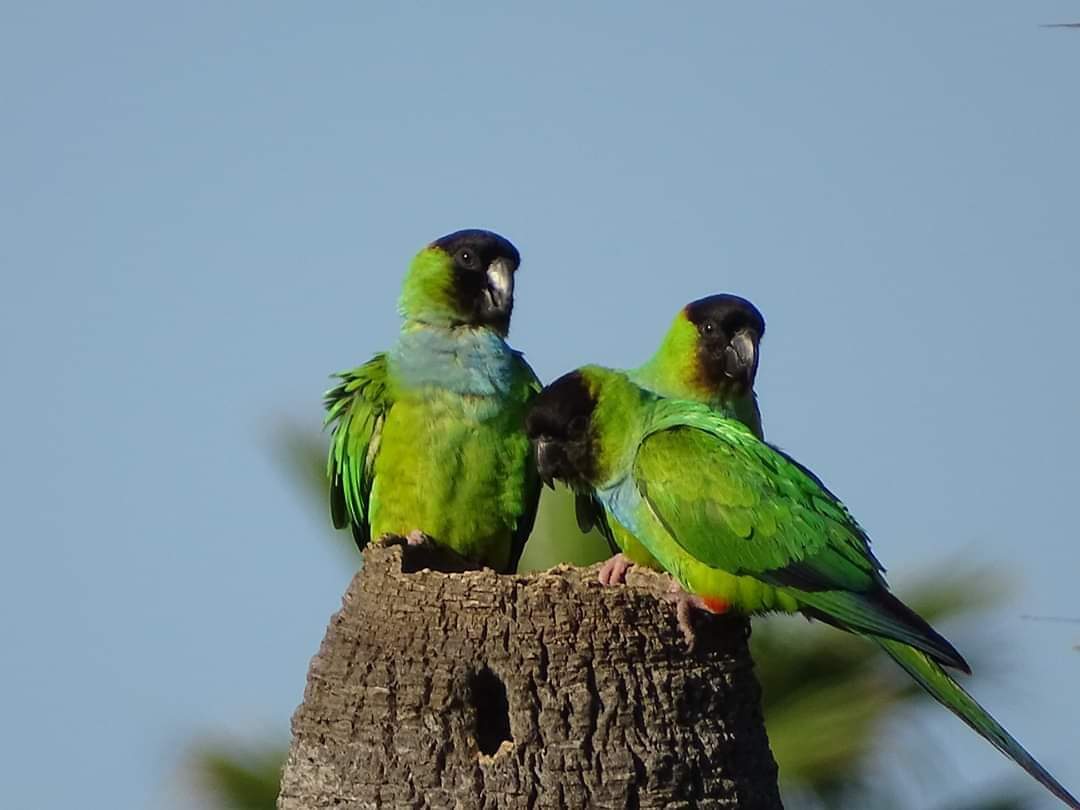
It's a sight and sound familiar to anyone who has spent time in St. Petersburg: a sudden, joyous squawking overhead, followed by a flash of emerald green against the brilliant blue Florida sky. A flock—or more accurately, a "pandemonium"—of wild parrots streaks past, their vibrant colors and boisterous calls a living, breathing part of the city's unique tropical charm. These feathered jewels are more than just wildlife; they are a symbol of the exuberant and unexpected character that makes St. Pete so special.For residents and visitors alike, these birds spark curiosity. Who are they? Where did they come from? This guide offers a comprehensive look into the world of Florida's green parrots, telling their surprising story and revealing the best spots in St. Petersburg to see them. At Eagan Luxury, we believe that choosing a home is about more than just property; it's about embracing a lifestyle. Understanding the unique environment, from the waterfront sunrises to the cheerful chaos of the local parrots, is part of what makes moving to St. Petersburg such an enriching experience.A pandemonium of wild green parrots gathered in a palm tree—a common and delightful sight across St. Petersburg, FL.
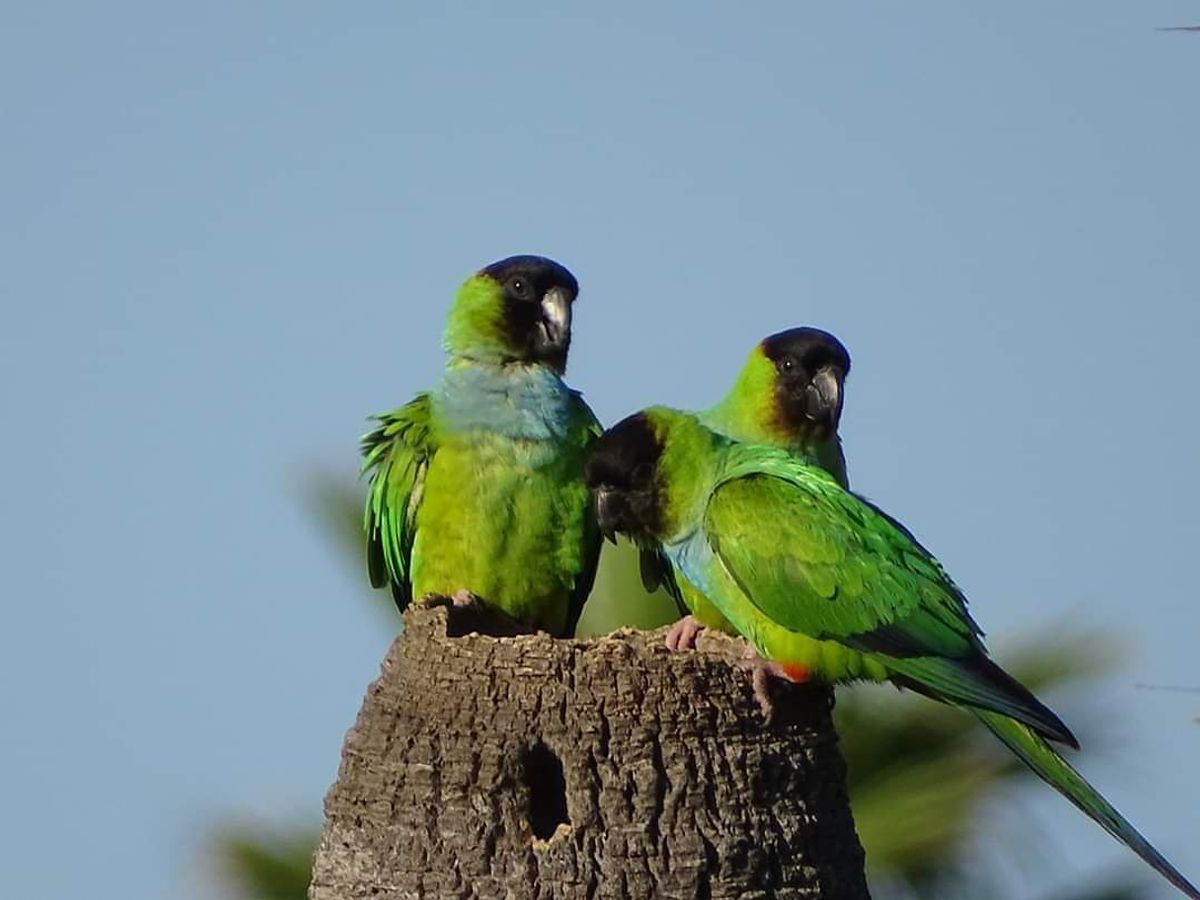
A pandemonium of wild green parrots gathered in a palm tree a common and delightful sight across St. Petersburg, FL.
Who Are These Colorful Characters? Identifying Florida's Green Parrots
While you might see a few different types of parrots coloring the skies of the Tampa Bay area, two species, in particular, have become the stars of the show. Learning to distinguish them is the first step to appreciating these fascinating birds.
The Star of the Show: The Monk Parakeet (or "Quaker" Parrot)
The most common green parrot in Florida is the Monk Parakeet, often called a Quaker Parrot (Myiopsitta monachus). These intelligent and highly social birds are known for their bright, electric-green bodies, a soft grey face and breast, and striking blue-tipped flight feathers. They typically measure around 11 to 12 inches in length, making them a medium-sized parrot that is easy to spot.But their most remarkable trait is their architectural prowess. Monk Parakeets are the only parrots in the world that build large, communal stick nests. These impressive structures can grow to the size of a small car and house dozens of breeding pairs, each with its own private entrance. You'll often find these nests perched atop utility poles and cell towers throughout the city—a testament to their remarkable adaptability.Their diet in the wild consists primarily of seeds, fruits, berries, nuts, and blossoms. They are also known to forage from backyard fruit trees and bird feeders, making them a frequent and welcome guest in many St. Petersburg neighborhoods.A pair of Monk Parakeets (Quaker Parrots) surveying their surroundings—note the characteristic grey face and bright green plumage.
The Black-Hooded Beauty: The Nanday Parakeet
Sharing the skies with the Monk Parakeet is the Nanday Parakeet (Aratinga nenday). While similar in its vibrant green body, the Nanday is easily identified by its distinctive jet-black hood and face, which gives it a striking, masked appearance. It also sports bright orange feet, adding another splash of color to its profile. They are just as social and vocal as their Quaker cousins and are a frequent sight in St. Petersburg's pandemoniums. In fact, it's common to see both species flying and foraging together.
Other Feathered Friends
While the Monk and Nanday Parakeets are the most common, the Tampa Bay area is also home to smaller populations of other parrot species. Blue-crowned Conures have been spotted in certain St. Petersburg neighborhoods, and further south in Florida, species like the Red-crowned Amazon and Rose-ringed Parakeet add to the state's diverse feral parrot population. This incredible variety makes Florida one of the most fascinating places in the country for observing wild parrots.
An Unexpected History: How South American Parrots Made Florida Their Home
One of the most common questions about Florida's green parrots is whether they are native to the state. The answer is no, and their origin story is a fascinating tale of globalization, adaptation, and a surprising ecological twist.
The Pet Trade and the Great Escape
In the 1960s, tens of thousands of Monk Parakeets were imported from their native South America—primarily from regions in Brazil, Bolivia, and Argentina—to the United States for the booming exotic pet trade. It is estimated that as many as 65,000 birds were brought into the country before the trade was eventually restricted.Inevitably, some birds escaped captivity. Others were intentionally released by owners who underestimated the commitment of caring for a loud, intelligent parrot. These freed birds found Florida's warm, subtropical climate to be remarkably similar to their homeland, and they thrived. They formed feral colonies, bred prolifically, and their populations grew rapidly. As of 2016, it was estimated that approximately 35,000 Monk Parakeets existed in the wild throughout Florida, and given their reproductive success, that number is almost certainly much higher today.
Filling an Empty Niche: A Nod to the Lost Carolina Parakeet
The story of Florida's green parrots carries a poignant historical footnote. North America once had its own native parrot: the beautiful Carolina Parakeet (Conuropsis carolinensis). This small, green bird with a bright yellow head was once abundant across the eastern United States, including Florida. Tragically, it was driven to extinction by habitat destruction and hunting. The last known wild Carolina Parakeet was killed in Okeechobee County, Florida, in 1904, and the last captive bird died at the Cincinnati Zoo on February 21, 1918.While the Monk and Nanday Parakeets are not direct replacements, their arrival has, in a sense, filled the ecological void left by the Carolina Parakeet. The flash of green has returned to Florida's skies, carried on the wings of a new generation of resilient, adaptable birds.
A Parrot-Lover's Map: Where to See Green Parrots in St. Petersburg
For those looking to catch a glimpse of these vibrant birds, the good news is you don't have to go far. They have adapted remarkably well to urban and suburban life, and St. Petersburg is one of the best cities in Florida to observe them.
Location Type
Specific Spots in St. Petersburg
What to Look For
Urban Hotspots
Utility poles and neighborhood palm trees city-wide
Large, complex stick nests and loud, social chatter
Premier Parks
Boyd Hill Nature Preserve, Crescent Lake Park, North Shore Park
Flocks foraging for food or resting in the trees
Waterfront Areas
Vinoy Park, Snell Isle, Old Northeast waterfronts
Parrots flying over the water at sunrise and sunset
Urban Hotspots: Power Lines and Neighborhood Palms
Keep your eyes and ears open as you move through the city. The parrots' massive, sprawling nests are often built on utility poles and cell towers, making them visible from the road. Their loud, screeching calls are unmistakable and often the first sign that a pandemonium is nearby. They are a common sight in the palm trees of many residential neighborhoods, particularly in areas with mature fruit trees.
Premier Parks for Parrot Spotting
For a more intentional viewing experience, several of St. Pete's beautiful parks are known hotspots. Boyd Hill Nature Preserve, one of the city's most treasured natural areas, offers a wilder setting to observe them among native Florida landscapes. The large, open green spaces of Crescent Lake Park are a frequent gathering place for foraging flocks, and North Shore Park, with its proximity to the waterfront, provides a scenic backdrop for parrot watching.
A Waterfront Spectacle
There is something truly magical about seeing a pandemonium of parrots fly along the waterfront, their green feathers a stunning contrast against the sparkling bay. This is a common sight in the parks and neighborhoods that line the coast, including the beautiful communities of Snell Isle and the Old Northeast. Watching them at sunrise or sunset, as the sky turns shades of gold and pink, adds another layer of natural wonder to the experience of luxury waterfront living in St. Petersburg.
Living with the Pandemonium: The Pros and Cons of Our Feathered Neighbors
While their presence adds undeniable character to the city, it's important to have a balanced and honest perspective. As a non-native species, their proliferation comes with both considerable charm and real challenges.
The Charm: A Splash of Tropical Color and Character
For most residents, the parrots are a welcome delight and a beloved part of the local scenery. Their intelligence is remarkable—Monk Parakeets can even be trained to mimic human speech. Their complex social lives, their impressive nest-building, and, of course, their stunning beauty all contribute to the vibrant, tropical atmosphere that defines St. Petersburg. They are a daily reminder of the city's deep connection to nature and a unique feature that sets it apart from other coastal cities.
The Challenges: An Invasive Species
From an ecological standpoint, the parrots are classified as an invasive, non-native species by the Florida Fish and Wildlife Conservation Commission (FWC). They can compete with native birds for food and nesting resources, potentially displacing some local species. Furthermore, their massive communal nests, while architecturally impressive, can cause significant problems for utility companies. Nests built on power infrastructure can lead to short circuits, power outages, and costly removal and repair efforts. This has led wildlife managers and city officials to monitor their populations closely, though the birds are now a well-established part of the Florida landscape.
Embracing the St. Pete Lifestyle
The wild green parrots are a perfect metaphor for life in St. Petersburg: vibrant, social, a little bit wild, and utterly unforgettable. They are one of the many unique details that make living here an experience unlike any other—a daily adventure woven into the fabric of a sophisticated, sun-drenched urban environment.If you're ready to find a home where you can enjoy this unique lifestyle—from breathtaking waterfront views to the delightful pandemonium of our feathered residents—the Eagan Luxury team is here to guide you. Whether you're drawn to the historic charm of Old Northeast, the modern elegance of a downtown sky residence, or the serene beauty of a Tierra Verde waterfront estate, we will help you find your perfect place in the Sunshine City.Contact the Eagan Luxury team today to begin your journey and discover your own piece of paradise.
Frequently Asked Questions About Florida's Green Parrots
What are the most common green parrots in Florida?
The most common species is the Monk Parakeet, also known as the Quaker Parrot. It is recognized by its bright green body and grey face. The Nanday Parakeet, distinguished by its black head and orange feet, is also frequently seen, especially in the St. Petersburg and Tampa Bay area.
Are the green parrots in Florida native?
No, they are not native to Florida. The most common species are originally from South America and became established in the wild after escaping or being released from the pet trade starting in the 1960s. North America's only native parrot, the Carolina Parakeet, went extinct in 1918.
Why are there so many parrots in Florida?
Florida's warm, subtropical climate is very similar to their native South American habitat. This allows them to thrive, reproduce successfully, and establish large, self-sustaining colonies in the wild. The abundance of fruit trees and urban nesting sites also supports their growing populations.
Are Quaker parrots a nuisance in Florida?
While they are beloved by many residents for their color and character, they are technically classified as an invasive species by the Florida Fish and Wildlife Conservation Commission. Their large nests can cause damage to utility infrastructure, and they can compete with native bird species for resources.
Where is the best place to see parrots in St. Petersburg?
You can find them throughout the city, often on utility poles and in palm trees. For a dedicated viewing experience, local parks like Boyd Hill Nature Preserve, Crescent Lake Park, and North Shore Park are excellent spots for seeing them in large numbers. The waterfront areas near Snell Isle and Old Northeast are also popular sighting locations.

About Andrew J Rohm
Expert real estate agent specializing in St. Petersburg and surrounding areas. Helping families find their dream homes with personalized service and local market expertise.
Contact Andrew J Rohm