

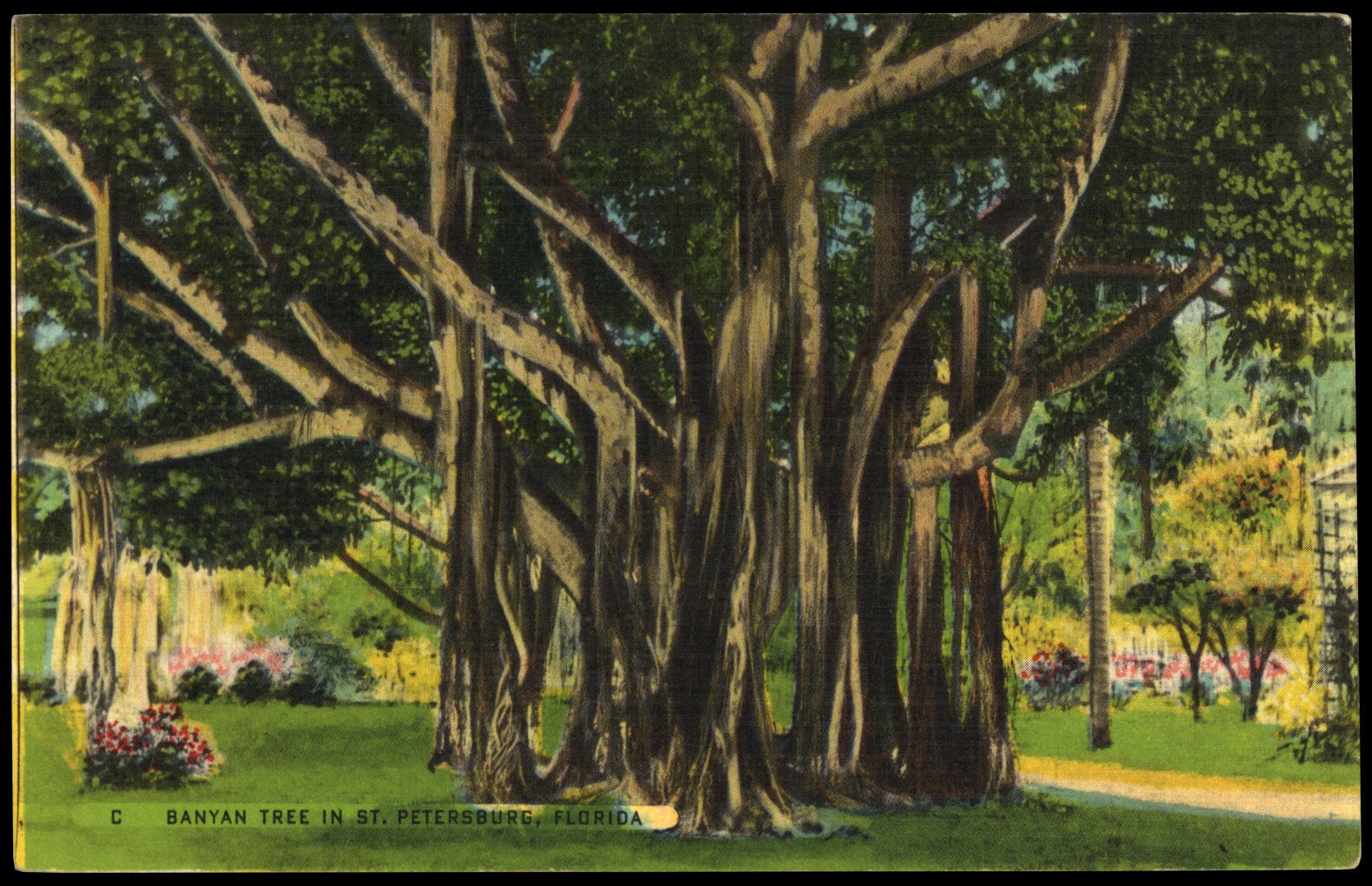
In the heart of St. Petersburg, where the vibrant energy of downtown meets the calm beauty of the waterfront, stand silent, sprawling giants that have become as much a part of the city's identity as the sunshine itself. These are the majestic banyan trees of St. Petersburg, Florida—living landmarks that offer far more than just shade. They are a testament to the city's rich history, a symbol of its unique subtropical allure, and an integral part of the luxury lifestyle that defines our most prestigious neighborhoods.For residents of the exclusive waterfront and sky residences of St. Petersburg, these magnificent trees are not just a backdrop. They are a daily encounter with natural artistry. Their intricate, cathedral-like structures of roots and branches frame the stunning views of the bay, adding a touch of the exotic to the meticulously curated cityscape. Whether you are a longtime local, a first-time visitor, or someone considering making St. Petersburg your home, this guide will walk you through the history, biology, best locations, and enduring significance of these remarkable trees.
A Living Legacy | The Storied History of St. Pete's Banyan Trees
The story of St. Petersburg's banyan trees is a fascinating chapter in Florida's history, intertwined with the legacies of some of America's most brilliant minds. The tale begins not in St. Pete, but further south in Fort Myers, in 1925. It was there that Harvey Firestone, the visionary tire magnate, gifted a four-foot-tall banyan sapling from India to his close friend, the inventor Thomas Edison. This was no casual gift. Edison, Firestone, and Henry Ford were on a collaborative quest to discover a domestic source of natural rubber for tire production, and the banyan was a species of keen interest.
That single tree, planted at Edison's winter estate, has since grown to cover over an acre of land. It remains a living monument to innovation and friendship that visitors can still see today at the Edison and Ford Winter Estates in Fort Myers. From this origin, the banyan's presence spread across South Florida, finding particular success in our corner of the Sunshine State.But how did these tropical trees come to thrive so far north in St. Petersburg? The answer lies in a unique geographical phenomenon known as the "peninsula effect." The warm waters of the Gulf of Mexico and Tampa Bay that surround Pinellas County create a temperate, subtropical microclimate.
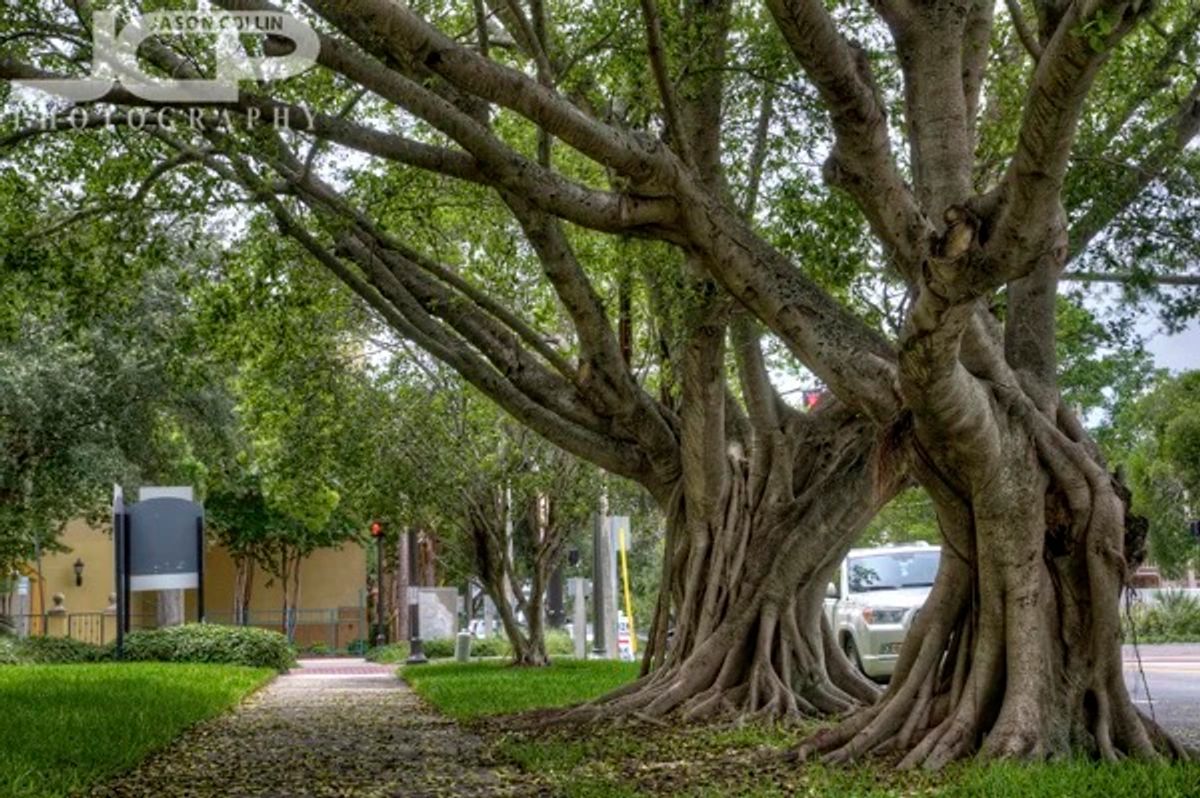
This natural buffer protects these tropical natives from the harsher frosts that can occur further inland and to the north. It is this microclimate that allows the banyans of St. Pete to flourish, marking the effective northernmost reach of their range in the continental United States.The most prominent banyan trees in downtown St. Petersburg, particularly those in North Straub Park, are estimated by arborists to be around 90 to 100 years old. While they may look ancient enough to have witnessed centuries of history, their impressive size is actually a testament to the ideal growing conditions our city provides. A wide-angle photograph of the banyan trees in North Straub Park with Beach Drive and the waterfront in the background.
More Than a Tree: The Unique Biology of the Banyan
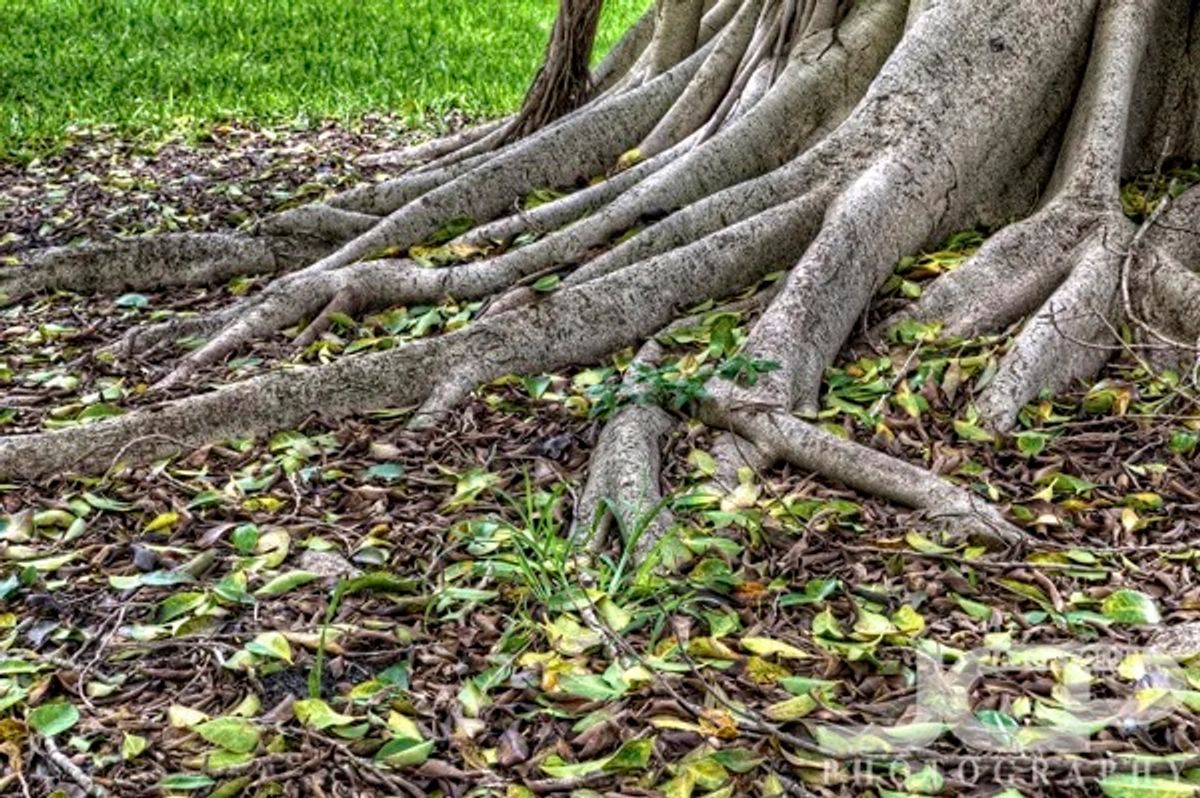
To truly appreciate a banyan tree is to understand its extraordinary biology. The banyan, or Ficus benghalensis, is a type of fig native to the Indian subcontinent. It grows in a way that seems to defy every rule you learned about trees as a child. Instead of growing upward from a single trunk, the banyan sends down aerial roots from its branches. These dangling tendrils, upon reaching the ground, thicken and take root, forming new, trunk-like pillars that support the tree's ever-expanding canopy.This process allows a single banyan to spread over a vast area, creating a forest-like appearance from what is, in fact, a single organism. The result is a breathtaking natural structure—a dense, shaded canopy supported by a labyrinth of smooth, grey trunks. The leaves are large, leathery, and glossy, providing a deep, cooling shade that offers a welcome respite from the Florida sun.It is this unique growth habit that gives the banyans their ancient, mystical appearance. Walking beneath a mature banyan feels like stepping into a natural cathedral, with columns of roots forming the nave and the dense canopy serving as the vaulted ceiling above. The world's largest banyan tree, the Great Banyan in the Acharya Jagadish Chandra Bose Indian Botanic Garden near Kolkata, India, covers approximately 4.7 acres—an area larger than a city block.
Feature
Detail
Scientific Name
Ficus benghalensis
Native Region
Indian subcontinent
Key Growth Feature
Aerial roots descend from branches, forming new supporting trunks
Leaf Type
Large, leathery, glossy, evergreen
Climate Requirement
Tropical to subtropical; thrives in St. Pete due to the peninsula effect
Largest Known Specimen
The Great Banyan in India, covering approximately 4.7 acres
Estimated Age in St. Pete
Approximately 90–100 years old (downtown specimens)
A Local's Guide to Finding St. Petersburg's Most Magnificent Banyan Trees
While the banyan trees are a signature feature of St. Petersburg, knowing where to find the most impressive specimens can elevate a simple stroll into a memorable journey. Most visitors only know about the famous trees on Beach Drive, but the city is home to several remarkable banyan locations. Here is a curated guide to St. Pete's most magnificent banyans.
The Icons of North Straub Park
The tour begins on the picturesque waterfront, in North Straub Park along Beach Drive NE. Here, opposite the Museum of Fine Arts and the chic sidewalk cafes of Alto Mare Fish Bar and Annata, stand the most famous and most photographed banyan trees in the city.
These sprawling giants are the unofficial gateway to the waterfront, their massive canopies creating a natural gathering place for locals and tourists alike. Their proximity to the vibrant downtown core, the St. Pete Pier, the Dali Museum, and the bustling restaurant scene, makes them a perfect starting point for exploring the city's natural beauty.Address: 216 Beach Drive NE, St. Petersburg, FL 33701
The Hidden Gems of the Old Northeast and Snell Isle
From Beach Drive, a short walk into the historic and affluent neighborhoods of the Old Northeast and Snell Isle reveals a different side of the banyan's character. Here, on quiet, tree-lined streets, you will find smaller yet equally enchanting banyan trees gracing the manicured lawns of stately homes.
These trees, often planted decades ago, have become an integral part of the neighborhoods' charm and architectural character. Their sprawling roots and branches add to the deep sense of history and permanence that makes these areas among the most desirable residential enclaves in St. Petersburg.
The Lakeside Sentinels of Mirror Lake and Crescent Lake
For a more tranquil banyan experience, head to the areas surrounding Mirror Lake and Crescent Lake Park. Here, impressive banyan trees stand as silent sentinels by the water's edge.
The reflections of their intricate forms in the calm waters of the lakes create a picture-perfect scene, offering a peaceful escape from the energy of downtown. These parks are popular with joggers, dog walkers, and families, and the banyans provide a stunning natural canopy over the walking paths.
The Coastal Giants of Bahama Shores
To see some of the largest and most impressive banyans in St. Petersburg, a trip to the Bahama Shores neighborhood in the south of the city is well worth the drive. This waterfront community is home to a number of truly massive banyan trees, their canopies stretching across wide avenues and creating a dramatic, tropical atmosphere. A drive or walk through this neighborhood offers a glimpse of the banyan in its full, majestic glory, far from the tourist crowds of downtown.
The Banyan Tree's Influence on St. Petersburg's Luxury Real Estate
In a luxury real estate market as competitive and dynamic as St. Petersburg's, every detail matters. And in our city, the presence of mature banyan trees is more than an aesthetic bonus, it is a genuine marker of neighborhood prestige and long-term property value.Properties in neighborhoods like the Old Northeast, Snell Isle, and Bahama Shores often command a premium when they feature a well-maintained banyan tree or are situated near one of the city's iconic specimens. These trees enhance the visual appeal of a property while also providing practical benefits such as deep shade, natural privacy screening, and a sense of established elegance that cannot be replicated by new construction alone.
For the residents of the luxury condominium towers and sky residences that line Beach Drive and the downtown waterfront, the views of the banyan-filled parks below are a priceless amenity. Looking down from a penthouse balcony onto the sprawling canopy of North Straub Park's banyans, with the bay glittering beyond, is an experience that encapsulates the unique blend of urban sophistication and natural beauty that defines St. Petersburg living.Great cities are defined by their great open spaces. What is the Upper East Side without Central Park? What is Paris without the Tuileries? In St. Petersburg, the banyan trees of Beach Drive and the waterfront parks serve that same essential role. They are the green heart of the city, the feature that draws people to live, dine, and invest in the downtown corridor. They are a living, growing reason why St. Petersburg's luxury market continues to attract discerning buyers from across the country.At Eagan Luxury, we understand that luxury is not just about the features within a home, but also about the environment that surrounds it. The banyan trees of St. Petersburg are a key element of that environment, contributing to the quality of life and the long-term value of the properties we represent.
Frequently Asked Questions About St. Petersburg's Banyan Trees
Where are the most famous banyan trees in St. Petersburg, Florida?The most famous banyan trees are located in North Straub Park, along Beach Drive NE in downtown St. Petersburg. They stand directly across from the Museum of Fine Arts and several popular waterfront restaurants. This is the most photographed banyan tree location in the city.How old are the banyan trees in St. Pete?The most prominent banyan trees in downtown St. Petersburg are estimated by arborists to be approximately 90 to 100 years old. While they appear ancient due to their massive size and complex root systems, their impressive growth is a testament to St. Petersburg's ideal subtropical climate rather than extreme age.Why do banyan trees grow in St. Petersburg but not further north in Florida?St. Petersburg benefits from a unique geographical phenomenon called the "peninsula effect." The warm waters of the Gulf of Mexico and Tampa Bay surround Pinellas County, creating a temperate, subtropical microclimate that protects the trees from the colder temperatures found further north and inland. This makes St. Pete the effective northern limit for banyan trees in the continental United States.Can you climb the banyan trees in St. Petersburg?While the sprawling trunks and hanging roots may be tempting, climbing the banyan trees is strongly discouraged. Climbing can damage their delicate aerial roots and bark, and the city actively works to preserve these living landmarks for future generations. Visitors are encouraged to admire and photograph the trees from the ground.What is the best time of day to photograph the banyan trees?The golden hours of sunrise and sunset offer the most dramatic lighting for photographing the banyans. In the morning, shafts of hazy light filter through the humid air and the canopy. At sunset, long shadows create a moody, atmospheric effect. Midday provides the best light for capturing the details of the bark and root textures under the shaded canopy.
Experience the Majesty of St. Petersburg
The banyan trees are just one of the many features that make St. Petersburg, Florida, a truly exceptional place to call home. From the world-class art and culture of our downtown museums to the pristine beaches of the Gulf Coast, our city offers a lifestyle of unparalleled sophistication and natural beauty.If you are ready to explore the possibility of making St. Petersburg your home—perhaps in a waterfront estate shaded by a majestic banyan, or a sky residence overlooking the tree-lined parks of Beach Drive—we invite you to contact the team at Eagan Luxury. With over $252 million in sales and an intimate knowledge of the city's most exclusive neighborhoods, Deborah Eagan and the Eagan Luxury team are uniquely positioned to connect discerning clients with extraordinary properties.
Call Deborah Eagan: 727.637.1019
Email:EaganAd@gmail.com
Source: https://jasoncollinphotography.com/blog/2011/8/30/banyan-trees-of-downtown-st-petersburg-appreciation.html
Source: https://jasoncollinphotography.com/blog/2011/8/30/banyan-trees-of-downtown-st-petersburg-appreciation.html

About Andrew J Rohm
Expert real estate agent specializing in St. Petersburg and surrounding areas. Helping families find their dream homes with personalized service and local market expertise.
Contact Andrew J Rohm